Mistletoe (Viscum album)
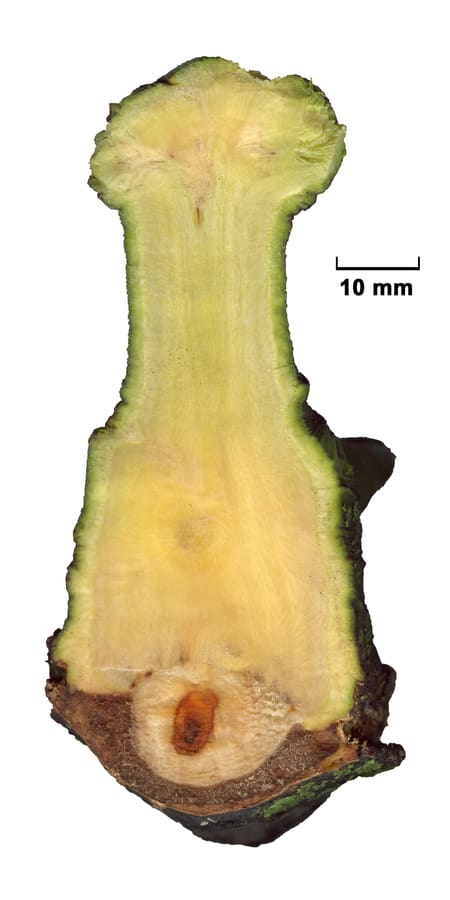
Photo: George Chernilevsky · Public domain
- Licensed photo
Overview
European mistletoe (Viscum album) is a parasitic evergreen shrub that forms large clumps on host trees, producing narrow leaves, yellowish flowers, and sticky white berries. Used for centuries in various folkloric traditions, it’s a potent nervine, hypotensive agent, and - in anthroposophical medicine - an adjunct therapy in cancer.
Traditional uses & properties
Cardiac & Hypotensive: Lowers blood pressure and helps with nervous heart conditions when used judiciously. Nervine & Sedative: Eases stress, anxiety, and certain types of headaches. Oxytocic: Stimulates uterine contractions during labor. Cancer Research: Used in anthroposophical medicine, though mainstream acceptance varies.
Traditional preparations
Preparation amounts are not shown for this herb. It is toxic, restricted, or otherwise unsafe to self-dose - the margin between a traditional dose and a harmful one is too small to publish as reference material. If you are considering it, that conversation belongs with a doctor or a qualified practitioner, not a website.
Safety & precautions
Professional Supervision: Potentially toxic and must be used carefully. Pregnancy: Can act as an abortifacient; avoid. Blood Pressure & MAOIs: Interactions may cause sudden drops in pressure; do not combine with antihypertensives. Berries: Especially toxic; best avoided in internal use.
Drug & food interactions
Interaction data is not available for this herb - talk to a pharmacist before combining it with any medication. A blank entry here means we have not documented interactions, not that none exist.
Habitat
Native to Europe and northern Asia, mistletoe grows on deciduous host trees (especially apple). Leaves and branches (and sometimes berries) are harvested in autumn.
Frequently asked questions
What is Mistletoe (Viscum album) traditionally used for?
Traditional sources describe Mistletoe (Viscum album) as follows: Cardiac & Hypotensive: Lowers blood pressure and helps with nervous heart conditions when used judiciously. Nervine & Sedative: Eases stress, anxiety, and certain types of headaches. Oxytocic: Stimulates uterine contractions during labor. Cancer Research: Used in anthroposophical medicine, though mainstream acceptance varies.
How is Mistletoe (Viscum album) prepared?
Preparation amounts are not shown for this herb. It is toxic, restricted, or otherwise unsafe to self-dose - the margin between a traditional dose and a harmful one is too small to publish as reference material. If you are considering it, that conversation belongs with a doctor or a qualified practitioner, not a website.
What safety cautions apply to Mistletoe (Viscum album)?
Professional Supervision: Potentially toxic and must be used carefully. Pregnancy: Can act as an abortifacient; avoid. Blood Pressure & MAOIs: Interactions may cause sudden drops in pressure; do not combine with antihypertensives. Berries: Especially toxic; best avoided in internal use.