
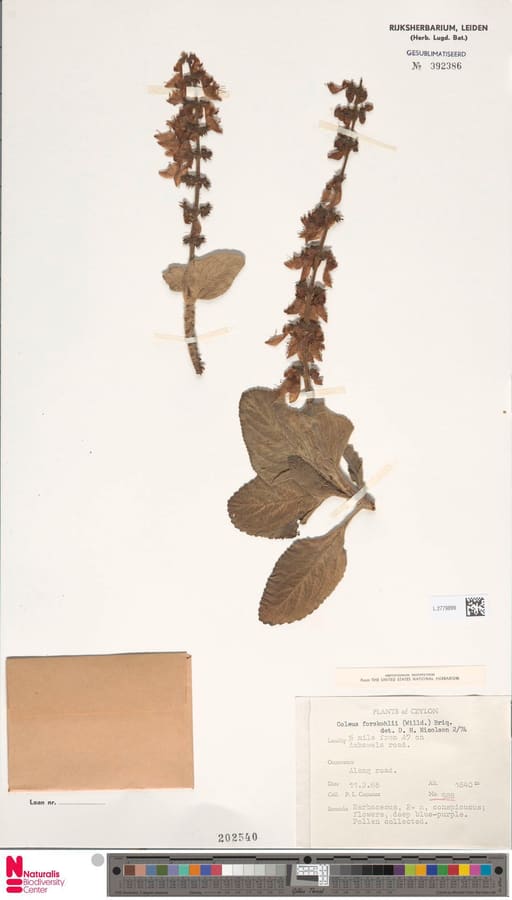
Coleus (Coleus forskohlii)
Photo: Naturalis Biodiversity Center · CC0
- Head and Neck
- 2 conditions
- Licensed photo
Overview
Analgesic (Anodyne) & Antiseptic: Eugenol content helps relieve pain (e.g., toothaches) and kill bacteria. Aromatic & Carminative: Eases digestive discomfort such as gas, bloating, and colic. Counterirritant & Stimulant: Improves local blood flow, especially when used in liniments, and can gently energize the mind/body. Vermifuge: Traditionally used to expel intestinal parasites.
Traditional uses & properties
Heart & Circulatory Tonic: May aid congestive heart failure, poor coronary blood flow, and lower high blood pressure. Antispasmodic & Bronchodilator: Relaxes smooth muscle, helpful in asthma, bronchitis, and other respiratory complaints. Digestive Remedy: Traditionally taken for gas and bloating. Potential Thyroid Support: Stimulates thyroid hormone release, possibly improving metabolism.
Safety & precautions
Circulatory & Glaucoma: Do not self-treat serious conditions like heart failure or elevated eye pressure without professional oversight. General Use: While the single compound forskolin is well-studied, the whole herb has not undergone extensive research; use with caution.
Drug & food interactions
Interaction data is not available for this herb - talk to a pharmacist before combining it with any medication. A blank entry here means we have not documented interactions, not that none exist.
Habitat
Native to the plains and lower Himalayan slopes of India, coleus also grows in other subtropical or warm-temperate regions (e.g., Nepal, Sri Lanka, Myanmar, parts of Africa). Now cultivated commercially, especially in Gujarat, it prefers well-drained soil in sun or partial shade. Harvest takes place in autumn, collecting both root and leaves.
Traditionally used for
Each condition shows its first 2 remedies free. Premium opens the full remedy list for every condition - or come back for the free Condition of the Day.
Frequently asked questions
What is Coleus (Coleus forskohlii) traditionally used for?
Traditional sources describe Coleus (Coleus forskohlii) as follows: Heart & Circulatory Tonic: May aid congestive heart failure, poor coronary blood flow, and lower high blood pressure. Antispasmodic & Bronchodilator: Relaxes smooth muscle, helpful in asthma, bronchitis, and other respiratory complaints. Digestive Remedy: Traditionally taken for gas and bloating. Potential Thyroid Support: Stimulates thyroid hormone release, possibly improving metabolism.
What safety cautions apply to Coleus (Coleus forskohlii)?
Circulatory & Glaucoma: Do not self-treat serious conditions like heart failure or elevated eye pressure without professional oversight. General Use: While the single compound forskolin is well-studied, the whole herb has not undergone extensive research; use with caution.
Related herbs
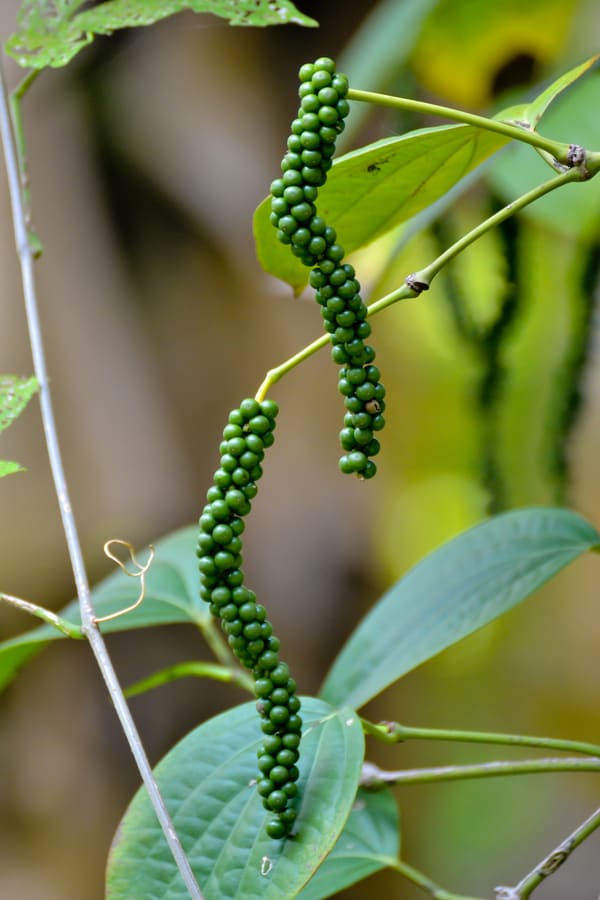 Black Pepper (Piper nigrum)
Black pepper is a perennial woody climbing vine growing to about 16 feet, with large oval leaves, spikes of small white flowers, and clusters of small round fruits that ripen from green to red. Native to southwestern India and now cultivated in tropical areas worldwide, the fruit is harvested from plants that are at least three years old. Different processing methods yield green, black, red, and white peppercorns, each with distinct flavors and uses. Cultivated as both a spice and medicine since ancient times, pepper was such a prized commodity in world trade that Attila the Hun reportedly demanded 3,000 pounds of it as ransom during his siege of Rome in 408 CE.
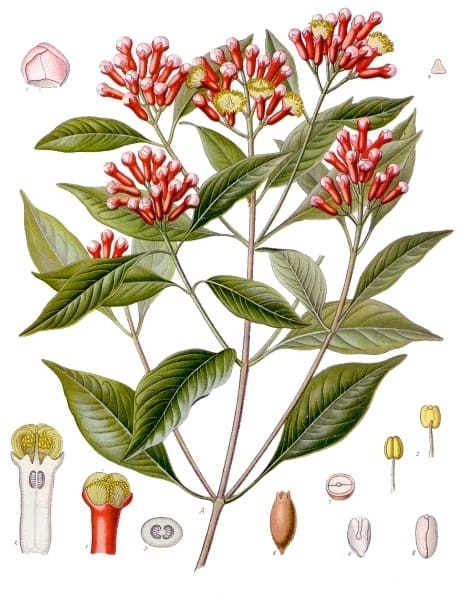 Clove (Eugenia caryophyllata)
Clove (Syzygium aromaticum) consists of the dried, unopened flower buds of an evergreen, pyramid-shaped tree that can reach about 49 ft (15 m) in height. Known for their potent aroma and taste, cloves have a significant history both as a culinary spice and as an herbal medicine - particularly valued in India and Southeast Asia. Clove’s volatile oil, rich in eugenol, has strong anesthetic and antiseptic effects, explaining its traditional use for toothache and oral infections. When applied topically, clove oil can numb local nerve endings, but it must be used with caution due to its irritant nature.
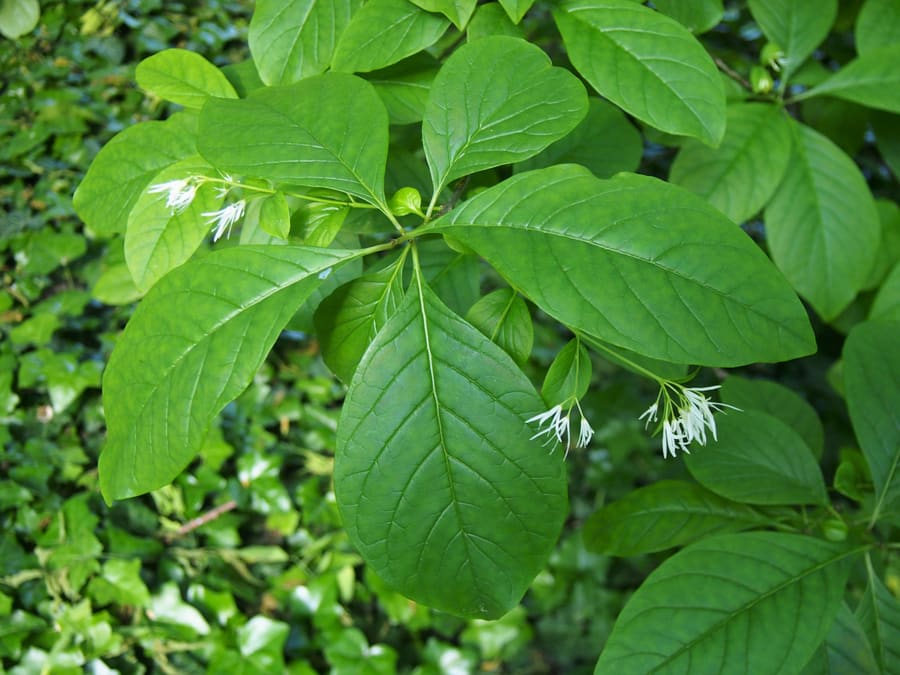 Fringe Tree (Chionanthus virginicus)
Fringe tree is a deciduous shrub or tree growing to 33 feet with elliptical dark green leaves, long flowering stems bearing spikes of white flowers, and dark blue oval fruits. Native to the United States and now also found in eastern Asia, it grows from Pennsylvania south to Florida and Texas and thrives on riverbanks and in damp shrubby areas. The root is unearthed in spring or autumn, mostly in Virginia and North Carolina. Native Americans and European settlers commonly used fringe tree to treat inflammations of the eye, canker sores, and spongy gums. The Choctaw of Louisiana applied the mashed bark to cuts and bruises, and Native Americans in Alabama used the bark for toothache. In the 19th-century Anglo-American Physiomedicalist tradition, it was valued as a bitter tonic and was often used to aid recovery from long-term illness.
 Ginkgo (Ginkgo biloba)
Ginkgo (Ginkgo biloba) is a distinctive, long-lived deciduous tree that can grow up to about 100 ft (30 m). It has fan-shaped leaves with radiating veins, often turning bright yellow in autumn. Ginkgo is widely revered for its benefits to circulation, especially in the brain, where it can help improve memory, concentration, and support cognitive function.
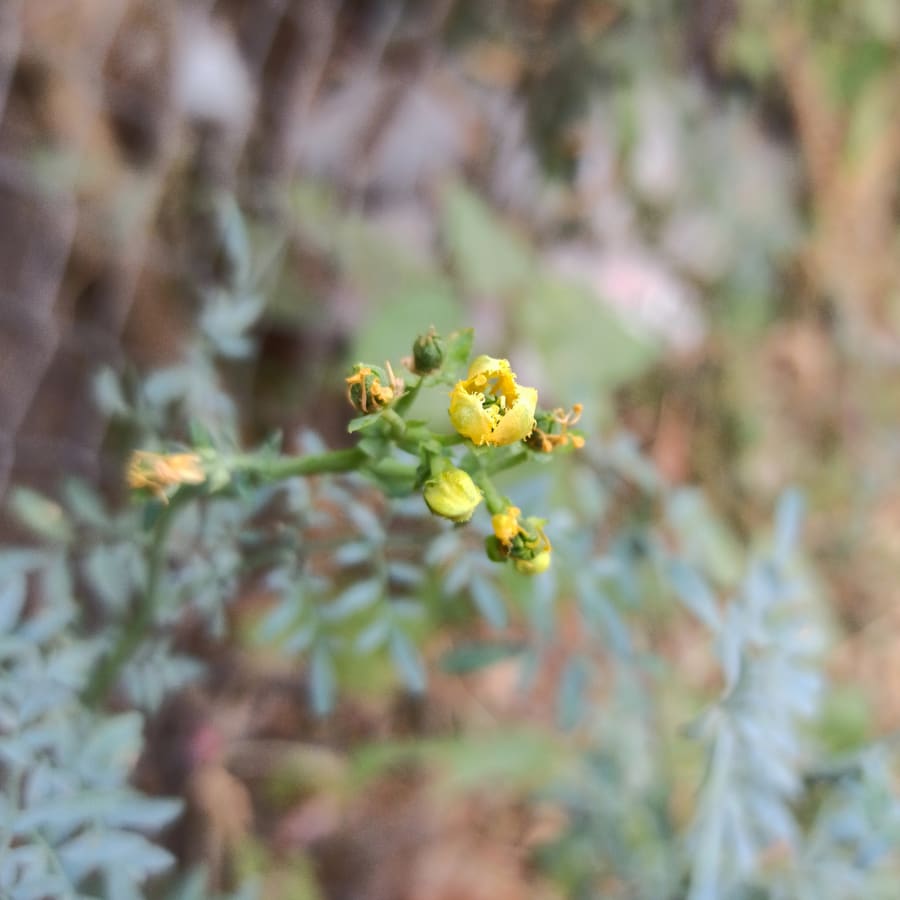 Prickly ash (Rutaceae)
Prickly ash (Zanthoxylum americanum) is a deciduous shrub or small tree growing to about 10 ft (3 m), featuring thorny gray branches and compound leaves. Its bark and berries have a warming, stimulating effect on circulation, offering relief for rheumatic pains, digestive sluggishness, and conditions like Raynaud’s disease (cold extremities) and intermittent claudication.