Herbs for Anaemia
4 herbs traditionally used for this condition.
- Rehmannia (Rehmannia glutinosa)
Rehmannia (Rehmannia glutinosa) is a perennial growing to about 1–2 ft (30–60 cm), with sticky leaves and purple tubular flowers. One of the most prized herbs in Traditional Chinese Medicine, it’s considered both cooling (raw) and nourishing (prepared), supporting liver, kidneys, blood, and longevity.
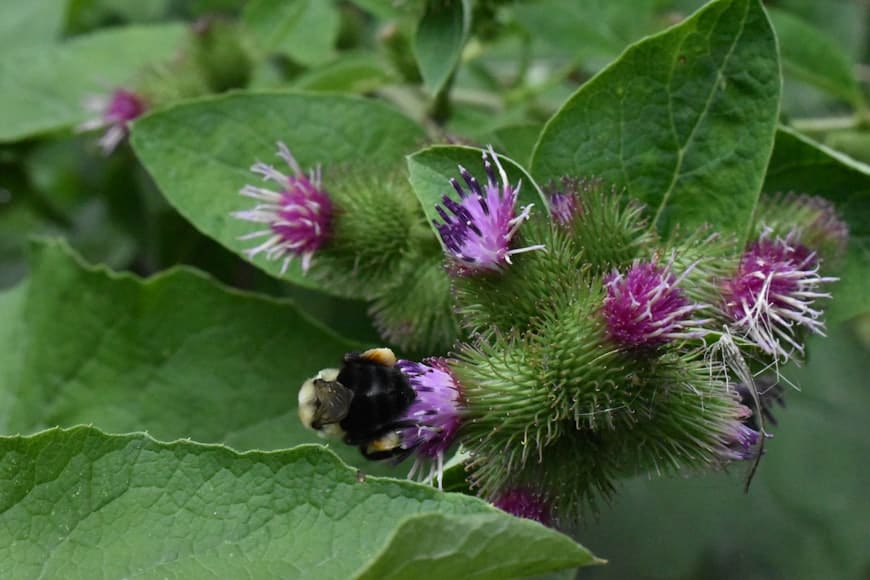
- Burdock (Arctium lappa)
Burdock is a sturdy, bitter herb well-regarded for its detoxifying influence, especially on the skin and liver. It stimulates bile flow, supports liver function, and is frequently used to address acne, eczema, and other skin irritations. Its large leaves may be applied as a poultice to infected sores, and a strong root decoction can soothe itching when added to a bath. Burdock also stabilizes mast cells, potentially reducing allergic reactions.
- Nettle (Urtica dioica)
Stinging nettle (Urtica dioica) is a perennial growing up to about 5 ft (1.5 m), recognized by its lance-shaped, serrated leaves and tiny greenish flowers. Though capable of “stinging,” nettle leaves and seeds are rich in protein, minerals, vitamins, and have a broad range of therapeutic effects, from anti-allergenic to diuretic.
- Codonopsis (Codonopsis pilosula)
Codonopsis is a small twining perennial growing to 5 feet with oval leaves and pendulous green and purple bell-shaped flowers marked with purple in summer. Native to northeastern China and growing throughout the region—especially in the Shanxi and Szechuan provinces—it is propagated from seed in spring or autumn, and the root is harvested in autumn once the aerial parts have died down. In Chinese herbal medicine, codonopsis holds a central place as a gentle tonic that increases energy levels, improves physical and mental well-being, and helps the body adapt to stress.