
Herbs for Hemorrhoids
5 herbs traditionally used for this condition.
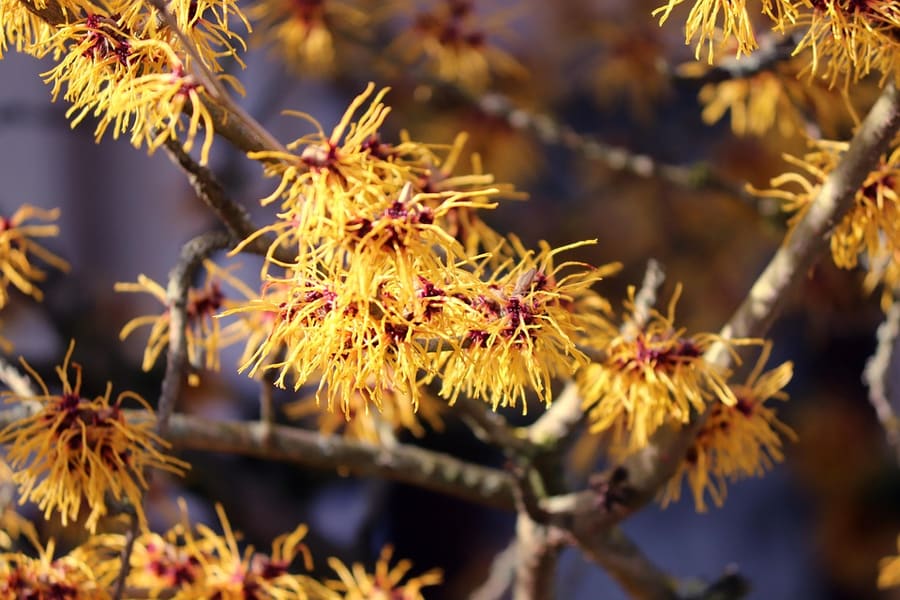
- Witch Hazel (Hamamelis virginiana)
Witch hazel (Hamamelis virginiana) is a small deciduous tree or shrub, often up to 16 ft (5 m), producing coarsely toothed leaves and distinct, ribbonlike yellow flowers in autumn or winter. Its bark and leaves are highly astringent, making witch hazel widely used for skin, varicose veins, and hemorrhoids.
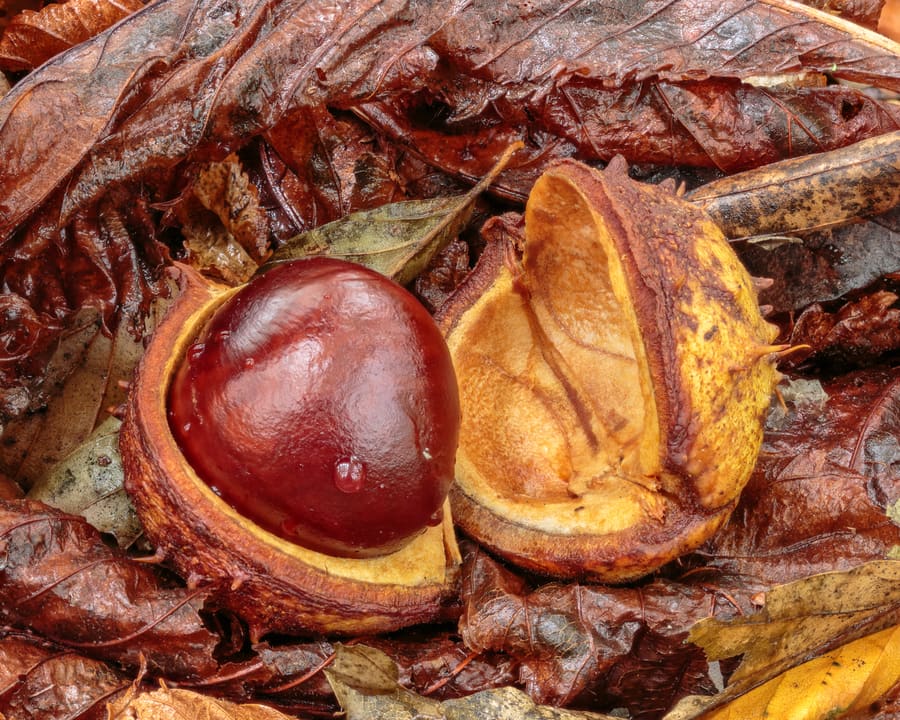
- Horse Chestnut (Aesculus hippocastanum)
Horse chestnut (Aesculus hippocastanum) is a large, stately deciduous tree growing up to about 80 ft (25 m), known for its palmate leaves and prickly green seed pods that contain shiny brown seeds (“conkers”). The seeds, bark, and leaves contain compounds that strengthen veins and reduce fluid retention, making horse chestnut a leading remedy for varicose veins and poor venous circulation.
- Slippery Elm (Ulmus rubra)
Slippery elm (Ulmus rubra) is a large tree native to the eastern U.S. and Canada. The medicinal part is the inner bark, prized for its high mucilage content. When soaked in water, it turns “slippery,” coating and soothing inflamed tissues in the mouth, throat, stomach, and intestines.
- Psyllium (Plantago ovata)
Psyllium, also known as flea seed due to its small brown appearance, is produced by several Plantago species. It has been used as a safe and effective laxative for thousands of years across Europe, North Africa, and Asia. The seeds and husks have a bland taste and develop a jellylike consistency when moistened due to their high mucilage content. The plants are extensively cultivated, especially in India, and propagated from seed in spring. Seeds are harvested when ripe in late summer and early autumn.
- Stone Root (Collinsonia canadensis)
Stone root is a perennial herb growing to 3 feet tall, characterized by a square stem, oval leaves, and clusters of greenish-yellow flowers. Native to moist woodlands of eastern North America, the root is harvested in autumn. The plant contains volatile oil, tannins, and saponins.