
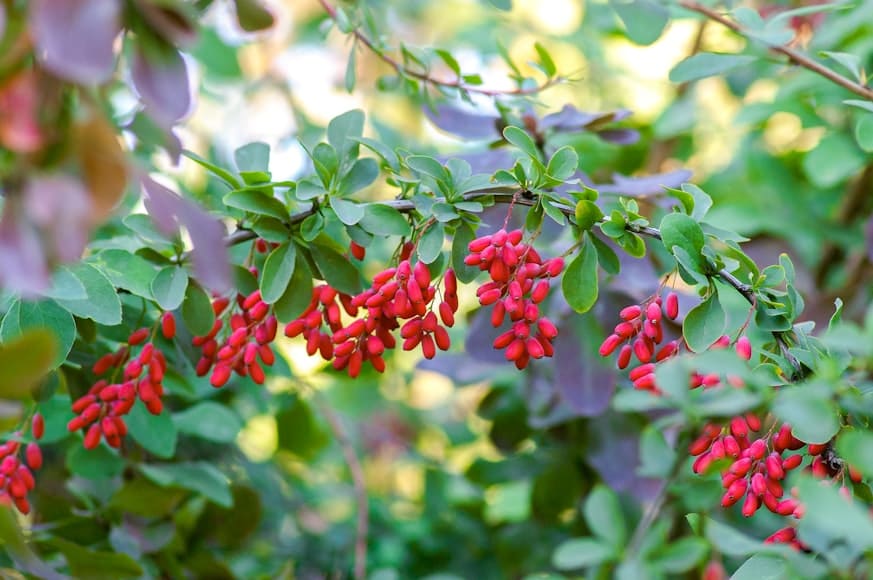
Barberry (Berberis vulgaris)
Photo: Unsplash
- Digestive
- 1 condition
- Licensed photo
Overview
Barberry is considered one of the best bitter liver tonics due to its high content of berberine - an antimicrobial and antifungal alkaloid. It is a thorny, deciduous shrub reaching about 10 ft (3 m) in height, with tough, leathery leaves, small yellow flowers, and bright red berries in autumn. The bark (both stem and root) is the most commonly used medicinal part, though the berries are also employed in traditional remedies.
Traditional uses & properties
Bitter & Cholagogue: Increases bile flow, supports gallbladder function, and can help with gallstones, jaundice, and digestive sluggishness. Antimicrobial & Antiseptic: Berberine and other isoquinoline alkaloids have shown activity against bacteria like E. coli, Salmonella, Shigella, and Vibrio cholerae. Barberry is also used for gastrointestinal infections (e.g., amoebic dysentery, cholera). Alterative (Blood Purifier): Commonly included in blood-purifying formulas, helpful for chronic skin conditions such as eczema and psoriasis. Astringent & Digestive Tonic: The bark can help control diarrhea and soothe the intestinal lining; the berries have a history of use for fevers and peptic ulcers.
Traditional preparations
Traditional texts describe the preparations below, and where those texts give specific amounts, the amounts are quoted here as part of that record. This is a record of historical practice, not a dosage recommendation - the figures are what the sources say, not what HerbMate tells you to take. Amounts, potency, and safe use vary enormously by preparation, plant part, and person.
Dried root (1:5); 1-5 ml (0.2-1 tsp.) 3-4 times daily
Use a compress of the decoction for bacterial infections. For fungal infections, apply a salve to the skin 3 times daily. Barberry will stain whatever it comes in contact with, including skin.
Fresh root (1:2, 95% alcohol); dried root (1:5, 50% alcohol); 1-4 ml (0.2-0.8 tsp.) 4 times daily
4 ounces 3 times daily
500-1,500 mg, 3 times daily
Safety & precautions
Pregnancy & Emaciation: Barberry is not recommended during pregnancy or for those in an emaciated or extremely weakened condition. Professional Supervision: Due to its strong alkaloid content, barberry should be used only under professional guidance.
Drug & food interactions
Interaction data is not available for this herb - talk to a pharmacist before combining it with any medication. A blank entry here means we have not documented interactions, not that none exist.
Habitat
Native to Europe and naturalized in North America, barberry is often grown as a garden plant and cultivated for its medicinal properties. The bark is typically collected in spring or autumn, while the berries are harvested in autumn.
Traditionally used for
Each condition shows its first 2 remedies free. Premium opens the full remedy list for every condition - or come back for the free Condition of the Day.
Frequently asked questions
What is Barberry (Berberis vulgaris) traditionally used for?
Traditional sources describe Barberry (Berberis vulgaris) as follows: Bitter & Cholagogue: Increases bile flow, supports gallbladder function, and can help with gallstones, jaundice, and digestive sluggishness. Antimicrobial & Antiseptic: Berberine and other isoquinoline alkaloids have shown activity against bacteria like E. coli, Salmonella, Shigella, and Vibrio cholerae. Barberry is also used for gastrointestinal infections (e.g., amoebic dysentery, cholera). Alterative (Blood Purifier): Commonly included in blood-purifying formulas, helpful for chronic skin conditions such as eczema and psoriasis. Astringent & Digestive Tonic: The bark can help control diarrhea and soothe the intestinal lining; the berries have a history of use for fevers and peptic ulcers.
How is Barberry (Berberis vulgaris) prepared?
Traditional texts describe the preparations below, and where those texts give specific amounts, the amounts are quoted here as part of that record. This is a record of historical practice, not a dosage recommendation - the figures are what the sources say, not what HerbMate tells you to take. Amounts, potency, and safe use vary enormously by preparation, plant part, and person. GLYCERITE: Dried root (1:5); 1-5 ml (0.2-1 tsp.) 3-4 times daily TOPICAL USE: Use a compress of the decoction for bacterial infections. For fungal infections, apply a salve to the skin 3 times daily. Barberry will stain whatever it comes in contact with, including skin. TINCTURE: Fresh root (1:2, 95% alcohol); dried root (1:5, 50% alcohol); 1-4 ml (0.2-0.8 tsp.) 4 times daily STANDARD DECOCTION: 4 ounces 3 times daily CAPSULE: 500-1,500 mg, 3 times daily
What safety cautions apply to Barberry (Berberis vulgaris)?
Pregnancy & Emaciation: Barberry is not recommended during pregnancy or for those in an emaciated or extremely weakened condition. Professional Supervision: Due to its strong alkaloid content, barberry should be used only under professional guidance.
Related herbs
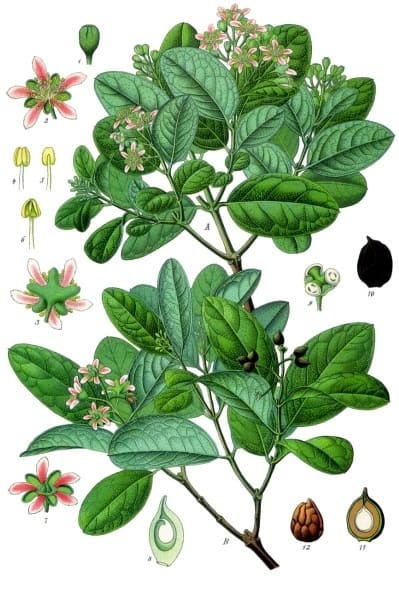 Boldo (Peumus boldus)Not for self-dosing
Boldo is a strongly aromatic multi-branched evergreen shrub or tree growing to 20 feet. It has egg-shaped leathery leaves with a lemony scent, clusters of white or yellow bell-shaped flowers, and small yellow berries. Native to Chile and Peru, it has become naturalized in the Mediterranean region and the West Coast of North America, where it grows on dry sunny slopes and in mountain pastures in the Andes. It is widely cultivated, and its leaves are gathered throughout the year. Boldo is a valued remedy in Latin American herbal medicine and is used by the Araucanian people in Chile as a tonic.
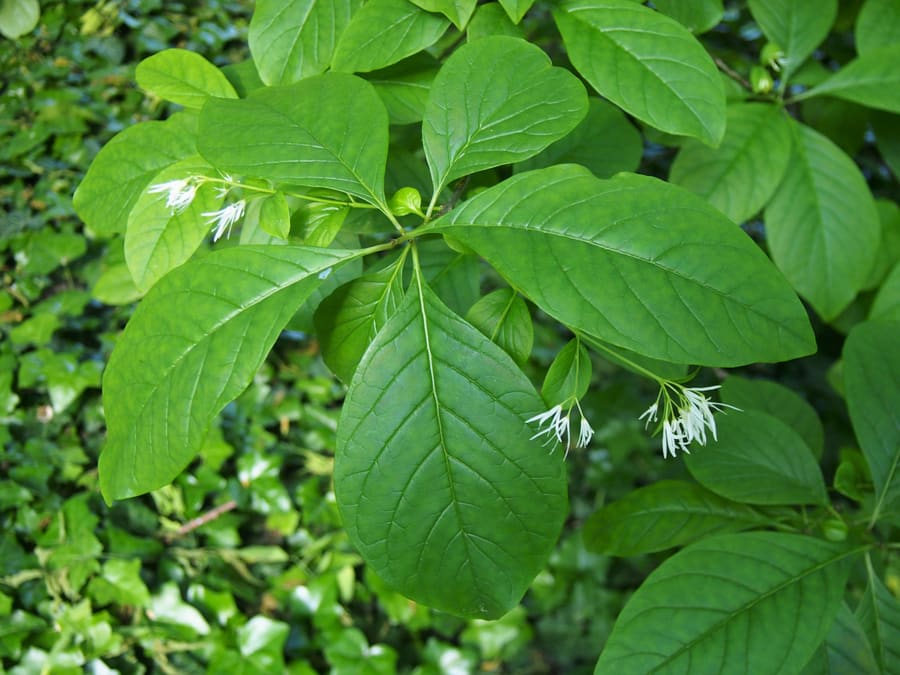 Fringe Tree (Chionanthus virginicus)
Fringe tree is a deciduous shrub or tree growing to 33 feet with elliptical dark green leaves, long flowering stems bearing spikes of white flowers, and dark blue oval fruits. Native to the United States and now also found in eastern Asia, it grows from Pennsylvania south to Florida and Texas and thrives on riverbanks and in damp shrubby areas. The root is unearthed in spring or autumn, mostly in Virginia and North Carolina. Native Americans and European settlers commonly used fringe tree to treat inflammations of the eye, canker sores, and spongy gums. The Choctaw of Louisiana applied the mashed bark to cuts and bruises, and Native Americans in Alabama used the bark for toothache. In the 19th-century Anglo-American Physiomedicalist tradition, it was valued as a bitter tonic and was often used to aid recovery from long-term illness.
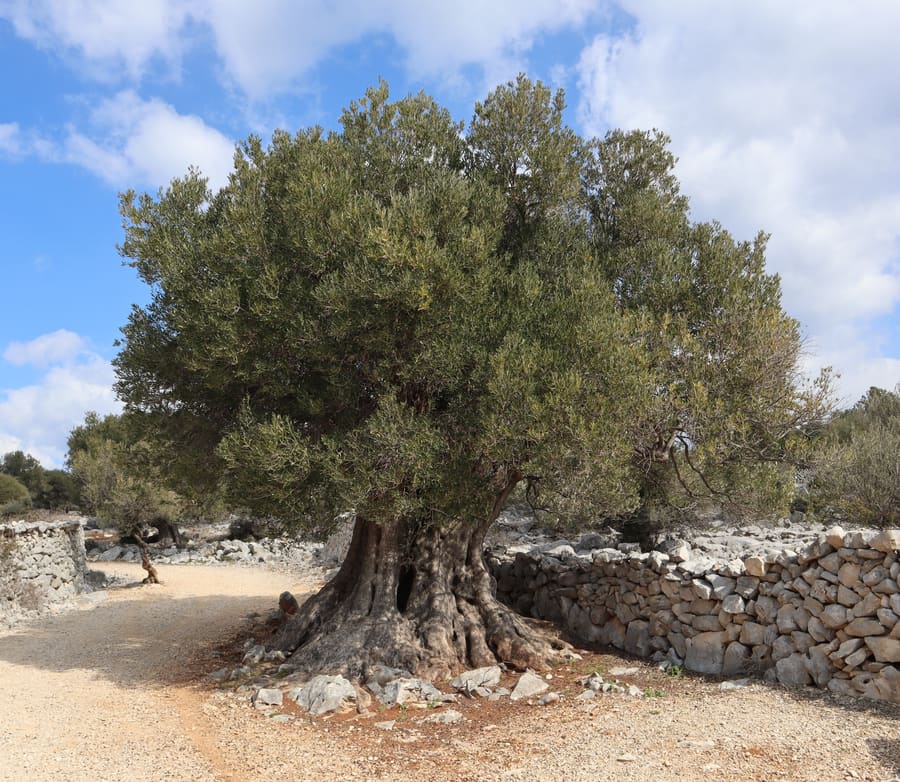 Olive (Olea europaea)
Olive (Olea europaea) is a small evergreen tree, typically 33 ft (10 m), with grayish bark, leathery leaves, and green fruit maturing to black. The leaves are mildly hypotensive, and olive oil (pressed from the fruit) is prized for its nutritional benefits - particularly in improving cardiovascular health and lowering cholesterol.
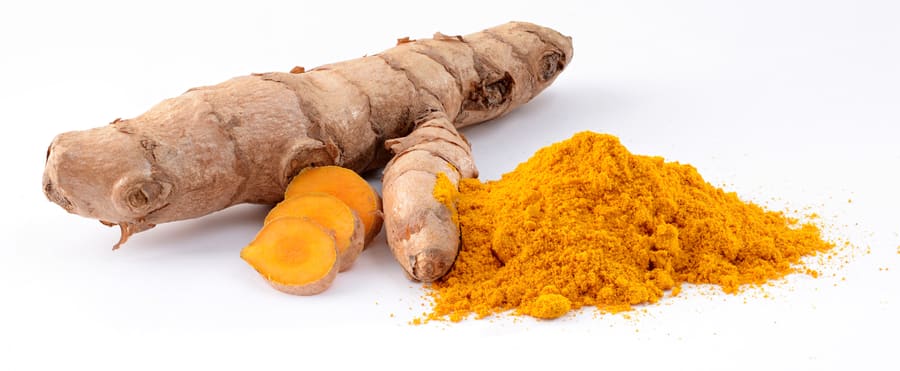 Turmeric (Curcuma longa)
Turmeric (Curcuma longa) is a perennial with a thick rhizome, growing to about 3 ft (90 cm), featuring lance-shaped leaves and pale yellow flowers. Renowned for its bright yellow-orange color, turmeric is a potent anti-inflammatory, antioxidant, and liver-supportive herb commonly employed in Indian cooking and Ayurveda.