
Herbs for Varicose Veins
3 herbs traditionally used for this condition.
- Horse Chestnut (Aesculus hippocastanum)
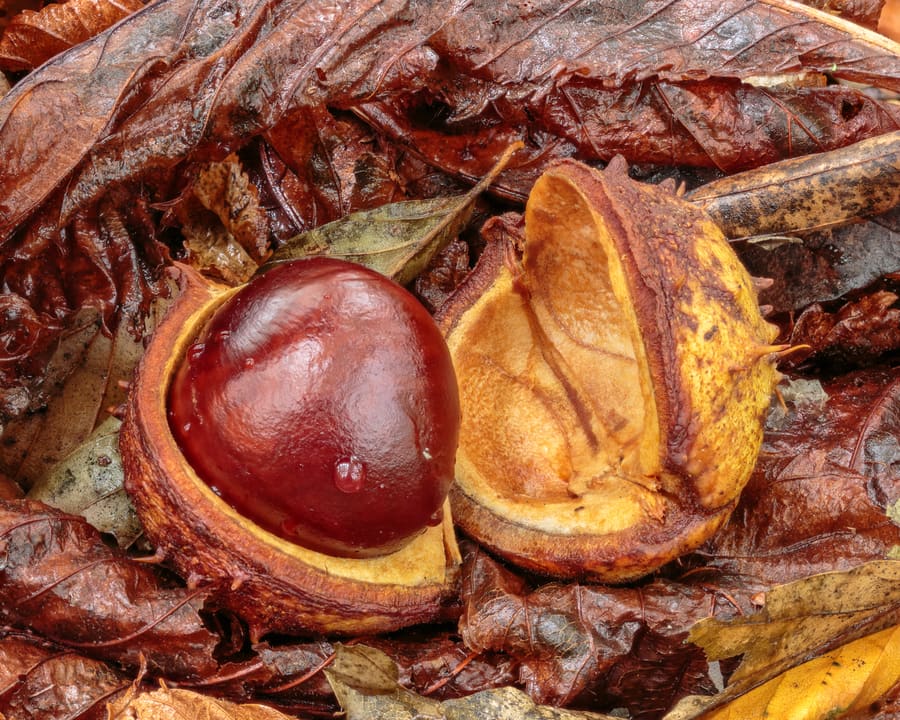
Horse chestnut (Aesculus hippocastanum) is a large, stately deciduous tree growing up to about 80 ft (25 m), known for its palmate leaves and prickly green seed pods that contain shiny brown seeds (“conkers”). The seeds, bark, and leaves contain compounds that strengthen veins and reduce fluid retention, making horse chestnut a leading remedy for varicose veins and poor venous circulation.
- Rosemary (Rosmarinus officinalis)
Rosemary (Rosmarinus officinalis) is an aromatic evergreen shrub, commonly growing to about 6½ ft (2 m), with narrow, pinelike leaves and small, pale blue flowers. Known for its distinctive flavor in Mediterranean cuisine, rosemary is also a prized medicinal herb that supports memory, circulation, and digestion. Its mildly bitter, warming quality has a long history of invigorating and uplifting properties.
- Stone Root (Collinsonia canadensis)
Stone root is a perennial herb growing to 3 feet tall, characterized by a square stem, oval leaves, and clusters of greenish-yellow flowers. Native to moist woodlands of eastern North America, the root is harvested in autumn. The plant contains volatile oil, tannins, and saponins.