
Herbs for Rheumatism
6 herbs traditionally used for this condition.
- Pipsissewa (Chimaphila umbellata)
Pipsissewa (Chimaphila umbellata) is an evergreen plant about 8 in (20 cm) tall, with glossy, wedge-shaped leaves and small, pinkish-white flowers in flat-topped clusters. A close relative of uva ursi, pipsissewa shares urinary antiseptic properties and is notably gentler on the kidneys.
- Devil's Claw (Harpagophytum procumbens)
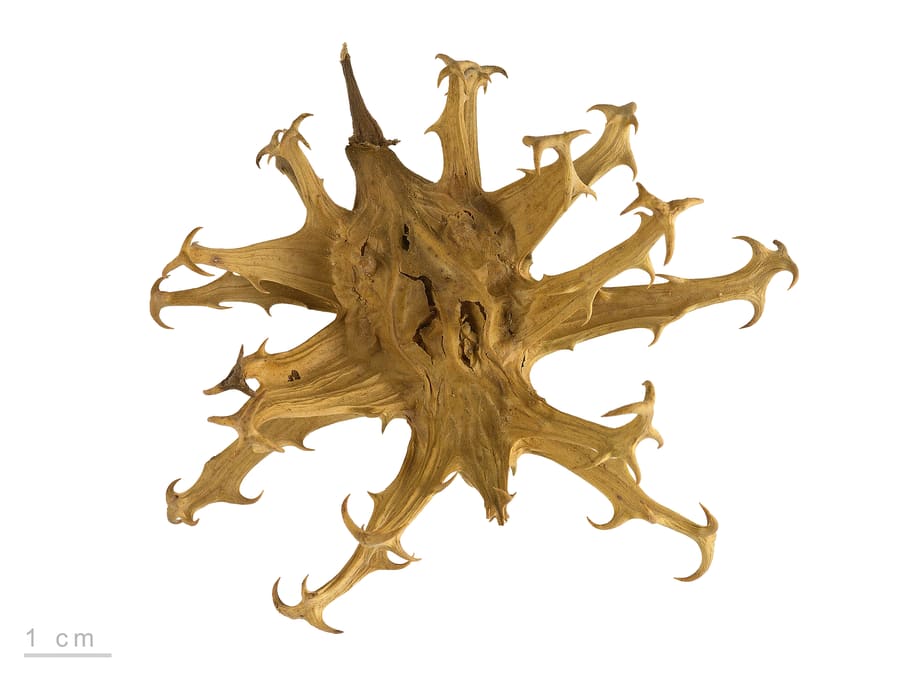
Devil’s claw (Harpagophytum procumbens) is a trailing perennial native to southern Africa, named for its hooked, woody fruits. For millennia, indigenous peoples have relied on its tuber to treat pain, fever, and digestive ailments. In modern herbalism, devil’s claw is best known for its anti-inflammatory and analgesic properties, frequently employed to support joint health and reduce arthritic or lower back pain. It also acts as a bitter tonic to stimulate digestion.
- Wild Yam (Dioscorea villosa)
Wild yam (Dioscorea villosa) is a twining vine growing to about 20 ft (6 m), with heart-shaped leaves and small greenish-yellow flowers. Historically used in Central America for menstrual and labor pain, it is commonly recognized in modern herbalism as an antispasmodic and anti-inflammatory remedy to ease menstrual cramps, colic, and various arthritic or neuralgic pains.
- Black Cohosh (Cimicifuga racemosa)
Black cohosh (Cimicifuga racemosa) is a tall herbaceous perennial, growing up to about 8 ft (2.5 m) with creamy-white flower spikes. Its thick, knobby root has a bitter, acrid taste and a distinctive odor. Traditionally, the root has been valued as a Native American remedy for women’s health issues, especially painful periods, menopausal problems (such as hot flashes), and uterine discomfort. It also has a history of use for rheumatic complaints, including rheumatoid arthritis, nerve conditions like tinnitus, and even venomous bites or stings. Modern research suggests black cohosh can help alleviate menopausal symptoms and may influence estrogenic activity within the body, although it does not contain estrogen itself.
- Blue Cohosh (Caulophyllum thalictroides)
Blue cohosh is an upright perennial herb reaching 3 feet in height, with large three-lobed leaves, yellow to purple flowers, and striking blue berries. It grows wild in much of eastern North America from Manitoba to Alabama, preferring woodland valleys and damp, north-facing slopes. The name 'cohosh' comes from the Algonquin language, and the plant was a popular remedy among many Native American tribes. Though taken by both sexes for genitourinary issues, it was primarily valued as a women's herb, and that tradition continues in modern herbal practice.
- Gravel Root (Eupatorium purpureum)
Gravel root is an erect perennial growing to 5 feet with whorls of pointed oblong leaves and clusters of purple-pink florets. Native to eastern North America, the root is unearthed in autumn. The plant's alternative name, Joe Pye weed, honors the Native American said to have used it to cure New Englanders of typhus. Native Americans valued the herb as a diuretic and remedy for genitourinary conditions, and the root was listed in the Pharmacopoeia of the United States from 1820 to 1842, attesting to its recognized medicinal importance.