
Herbs for Acne
8 herbs traditionally used for this condition.
- Neem (Azadirachta indica)
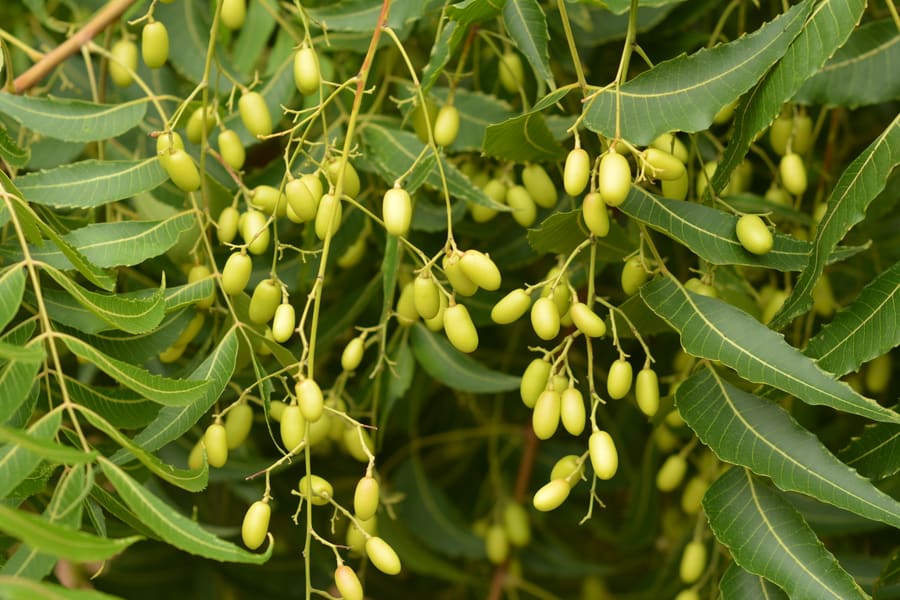
Neem (Azadirachta indica) is a large evergreen tree with compound leaves and white flowers, considered in India as a “village pharmacy” for its broad-spectrum antimicrobial, antifungal, and anti-inflammatory effects. Both leaves and seeds are used to treat infections, skin conditions, and other ailments.
- Licorice
Licorice (Glycyrrhiza glabra) is a tall, woody-stemmed perennial reaching about 6½ ft (2 m), with dark green leaves and cream-to-mauve pea-like flowers. Its root, sweetened by glycyrrhizic acid (up to 50 times sweeter than sugar), has a powerful anti-inflammatory action, offering relief in respiratory, digestive, and even arthritic conditions. Licorice is widely used in Chinese, European, and Western herbal medicine.
- Aloe (Aloe vera)
Aloe vera (syn. A. barbadensis) is a succulent commonly grown as a potted plant, notable for its thick, fleshy leaves that contain two distinct medicinal components. The inner clear gel is renowned for its soothing and wound-healing properties, while the bitter yellow sap from the leaf base (often called “bitter aloes”) has a strong laxative effect. Historically, aloe vera has been prized for treating skin irritations, burns, and ulcers. It can also be taken internally (as juice) to support digestion and immune function. Whole leaf aloe juice has been used to help fight arthritis, AIDS, cancer, and other chronic conditions, though the outer leaf portion containing anthraquinones is typically filtered out to avoid harsh laxative effects.
- Tea Tree (Melaleuca alternifolia)
Tea tree (Melaleuca alternifolia) is a small evergreen native to Australia, with papery bark, narrow leaves, and white to cream flower spikes. Its leaves produce a pungent, antiseptic essential oil that’s central to Australian bush medicine, used widely in Western herbalism since the 1920s for skin infections and general disinfection.
- Burdock (Arctium lappa)
Burdock is a sturdy, bitter herb well-regarded for its detoxifying influence, especially on the skin and liver. It stimulates bile flow, supports liver function, and is frequently used to address acne, eczema, and other skin irritations. Its large leaves may be applied as a poultice to infected sores, and a strong root decoction can soothe itching when added to a bath. Burdock also stabilizes mast cells, potentially reducing allergic reactions.
- Calendula (Calendula officinalis)
Calendula (Calendula officinalis), with its bright orange daisy-like flowers, is among the most versatile herbs in Western herbal medicine. Its petals contain antiseptic, anti-inflammatory, and vulnerary properties, making it excellent for speeding tissue repair in wounds, burns, bruises, and various skin irritations. Calendula is also used internally for gastrointestinal inflammation (e.g., Crohn’s disease, colitis, gastritis).
- Guggul (Commiphora mukul)
Guggul is a spiny shrub or tree growing to 6.5 feet with oval, serrated leaves, brownish-red flowers, and red fruits. The gum resin obtained from the bark forms pale yellow to brown 'tears' on the stems. Thriving in dry, semi-arid, and desert environments across much of the Indian subcontinent and the Middle East, it has been valued in Ayurvedic medicine for millennia. Early Ayurvedic texts describe guggul as effective in treating obesity, leading to modern research into its potential for managing fat metabolism problems such as raised blood cholesterol levels.
- Papaya Leaf (Carica papaya)
Papaya is a fast-growing tropical tree that can reach up to 26 feet in height, producing large fruits weighing up to 11 pounds. Originally native to tropical America, papaya has been widely cultivated in tropical regions throughout the world. The plant has been used in traditional Mayan medicine, and the leaves are still employed as a meat tenderizer in tropical Latin America due to their protein-dissolving enzymes.