
Herbs for Menopause
5 herbs traditionally used for this condition.
- Black Cohosh (Cimicifuga racemosa)
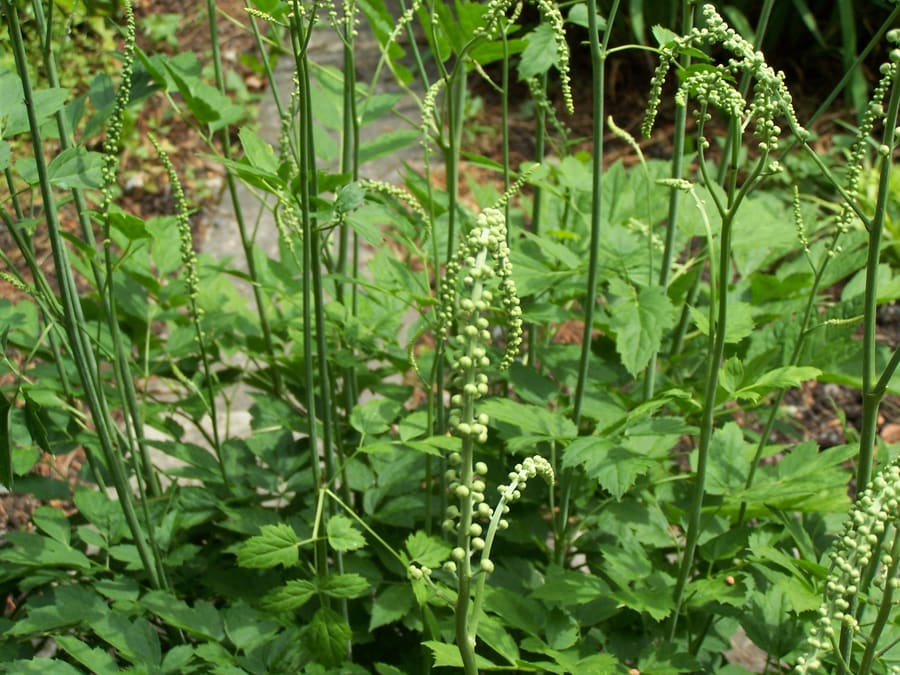
Black cohosh (Cimicifuga racemosa) is a tall herbaceous perennial, growing up to about 8 ft (2.5 m) with creamy-white flower spikes. Its thick, knobby root has a bitter, acrid taste and a distinctive odor. Traditionally, the root has been valued as a Native American remedy for women’s health issues, especially painful periods, menopausal problems (such as hot flashes), and uterine discomfort. It also has a history of use for rheumatic complaints, including rheumatoid arthritis, nerve conditions like tinnitus, and even venomous bites or stings. Modern research suggests black cohosh can help alleviate menopausal symptoms and may influence estrogenic activity within the body, although it does not contain estrogen itself.
- Red Clover (Trifolium pratense)
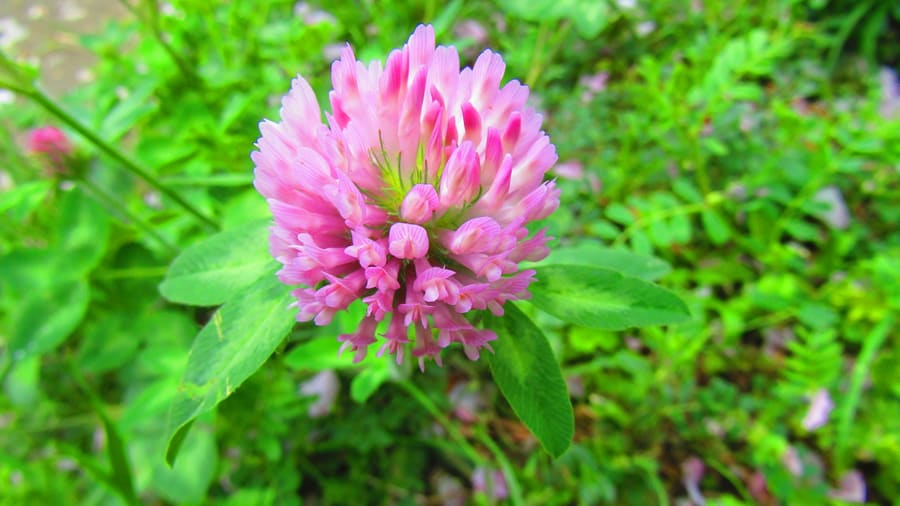
Red clover (Trifolium pratense) is a perennial legume about 16 in (40 cm) tall, with trifoliate leaves bearing a white crescent and pink-purple egg-shaped flowerheads. Used as a traditional “blood purifier,” it’s rich in isoflavones (phytoestrogens) and helpful for menopausal symptoms, certain skin conditions, and respiratory issues.
- Flaxseed (Linum usitatissimum)
Flaxseed (Linum usitatissimum), also called linseed, is a slender annual plant growing up to about 3 ft (1 m). It produces narrow leaves, delicate blue flowers, and spherical seed capsules containing shiny, flat seeds. Long cultivated in the Middle East and beyond, flaxseeds are rich in beneficial fatty acids (particularly alpha-linolenic acid), protein, fiber, mucilage, and lignans (phytoestrogens). These constituents make flaxseed valuable for heart health, inflammatory conditions, and supporting estrogen balance.
- Chinese Peony / White Peony (Paeonia lactiflora)
White peony is an upright perennial growing to 6.5 feet with large white flowers and divided, dark green leaves. Its history of medicinal use in China stretches back at least 1,500 years, most notably as one of the herbs in 'Four Things Soup,' a renowned female tonic. Traditionally, it is believed that women who take the herb regularly become as radiant as the flower itself. The plant is cultivated throughout northeastern China and Inner Mongolia, propagated from seed in spring or from root cuttings in winter. The root of 4- or 5-year-old plants is harvested in spring or autumn and valued as a hormonal tonic.
- Shatavari (Asparagus racemosus)
Shatavari is a slender perennial fern that can grow up to 23 feet in height, featuring fronds of needle-like leaves, tiny white flowers, and purple-black berries. Known as the 'Queen of herbs' in Ayurvedic medicine, its name literally means '100 spouses,' reflecting its reputation as a sexual tonic and fertility promoter. The root is the medicinal part used. Native to the Himalayas and Indian subcontinent, it grows wild in gravelly soils up to 3,900 feet above sea level and is also found in western China.