

Herbs for Memory Support
6 herbs traditionally used for this condition.
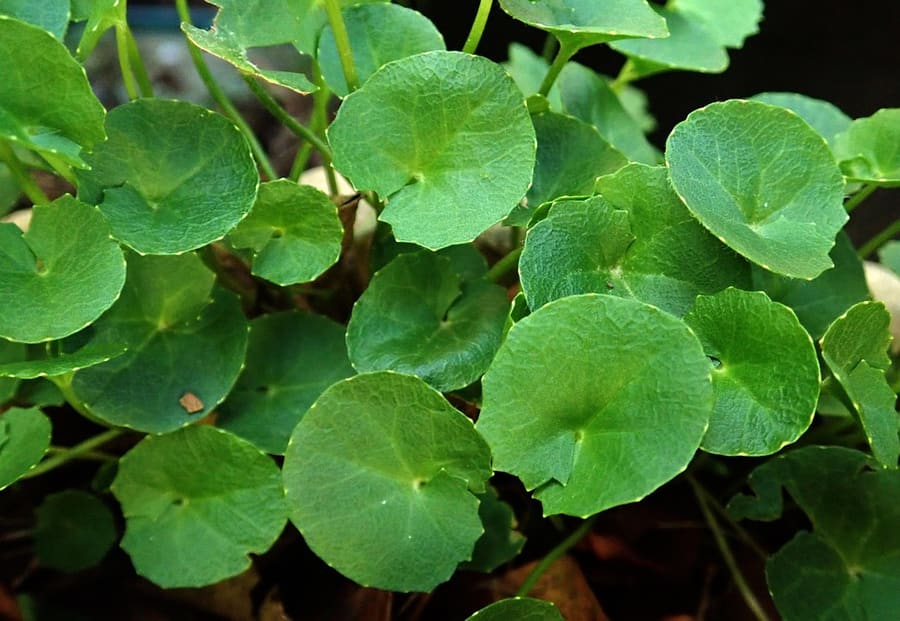
- Gotu Kola (Centella asiatica)
Gotu kola (Centella asiatica), also known as Hydrocotyle asiatica, is a creeping perennial reaching up to about 20 in (50 cm). It sports fan-shaped leaves, often used in salads across parts of India. Traditionally prized for promoting wound healing and improving nervous system function, it is considered both a cleansing herb for the skin and a reviving tonic for cognitive and nervous issues.
- Ginkgo (Ginkgo biloba)
Ginkgo (Ginkgo biloba) is a distinctive, long-lived deciduous tree that can grow up to about 100 ft (30 m). It has fan-shaped leaves with radiating veins, often turning bright yellow in autumn. Ginkgo is widely revered for its benefits to circulation, especially in the brain, where it can help improve memory, concentration, and support cognitive function.
- Rhodiola (Rhodiola rosea)
Rhodiola (Rhodiola rosea) is a fleshy perennial (up to about 16 in / 40 cm tall) thriving in mountainous and Arctic regions. Its rose-scented roots contain adaptogenic compounds that help the body cope with various stressors, enhance mental clarity, and reduce fatigue, mild depression, and nervous exhaustion.
- Rosemary (Rosmarinus officinalis)
Rosemary (Rosmarinus officinalis) is an aromatic evergreen shrub, commonly growing to about 6½ ft (2 m), with narrow, pinelike leaves and small, pale blue flowers. Known for its distinctive flavor in Mediterranean cuisine, rosemary is also a prized medicinal herb that supports memory, circulation, and digestion. Its mildly bitter, warming quality has a long history of invigorating and uplifting properties.
- Bacopa (Bacopa monnieri)
Bacopa, also known as Water Hyssop or Brahmi, is a creeping succulent perennial that can grow to about 20 inches. It features spatula-shaped fleshy leaves and pale blue or white flowers on slender stalks. Thriving in marshlands and along the edges of mangrove swamps in warmer temperate and tropical climates—especially southern Asia—it develops into dense mats on mudflats. This herb has been a cornerstone of Ayurvedic medicine for supporting cognitive function and treating various nervous system disorders, and it is increasingly recognized in Western herbalism for its brain-enhancing properties.
- Chinese Peony / White Peony (Paeonia lactiflora)
White peony is an upright perennial growing to 6.5 feet with large white flowers and divided, dark green leaves. Its history of medicinal use in China stretches back at least 1,500 years, most notably as one of the herbs in 'Four Things Soup,' a renowned female tonic. Traditionally, it is believed that women who take the herb regularly become as radiant as the flower itself. The plant is cultivated throughout northeastern China and Inner Mongolia, propagated from seed in spring or from root cuttings in winter. The root of 4- or 5-year-old plants is harvested in spring or autumn and valued as a hormonal tonic.