
Coltsfoot (Tussilago farfara)
Photo: The Cosmonaut · CC BY-SA 2.5 ca
- Respiratory
- 3 conditions
- Licensed photo
Overview
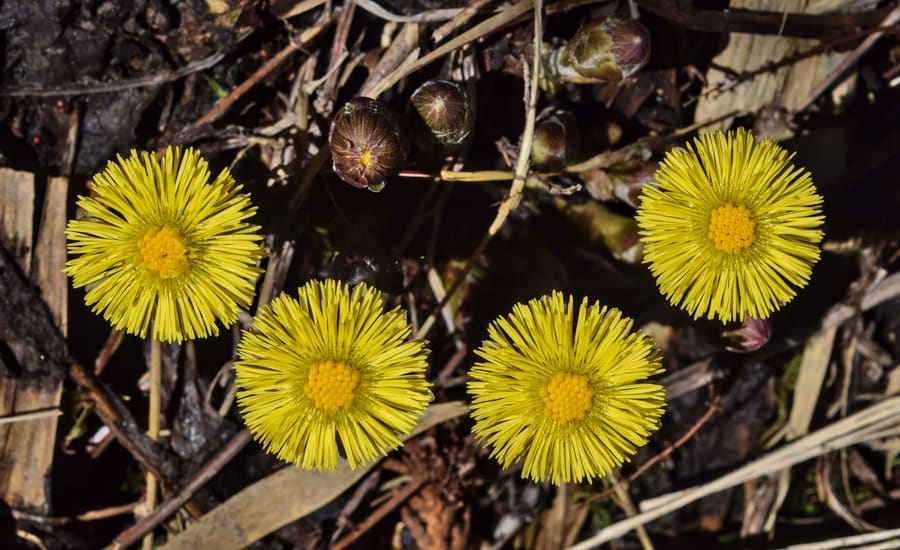
Coltsfoot is a perennial herb growing to 12 inches with flowering stems covered in purple scales, yellow-gold flowers, and heart-shaped leaves. Indigenous to Europe and northern Asia and naturalized in North America, it is commonly found along roadsides, on verges, and in open areas. The flowers are gathered in late winter, and the leaves in summer. For at least 2,500 years, coltsfoot has been taken as a cough remedy and smoked to ease breathing. The Greek physician Dioscorides in the 1st century CE recommended it for dry coughs and 'for those who are unable to breathe except standing upright.'
Traditional uses & properties
Coltsfoot is an effective demulcent and expectorant herb, making it one of the most popular European remedies for treating chest problems. In Europe, the leaves are preferred (as they contain lower amounts of pyrrolizidine alkaloids), whereas in China the flowers are favored. Both parts are taken as a decoction for chest conditions. When used as a syrup or medicinal cigarette, coltsfoot relieves asthma. It is a specific treatment for spasmodic coughs and is particularly effective in combination with licorice, thyme, and wild cherry. The herb's flavonoids (8% mucilage/polysaccharides) are anti-inflammatory and immunostimulant, and the flavonoids are anti-inflammatory and antispasmodic. Extracts of the whole plant increase immune resistance and act as a natural antihistamine. A Chinese trial involving 36 patients with bronchial asthma found that 75% showed some improvement, though the antiasthmatic effect was short-lived. The active constituents can decrease the time for bronchial cilia to recover after damage from smoking.
Traditional preparations
Preparation amounts are not shown for this herb. It is toxic, restricted, or otherwise unsafe to self-dose - the margin between a traditional dose and a harmful one is too small to publish as reference material. If you are considering it, that conversation belongs with a doctor or a qualified practitioner, not a website.
Safety & precautions
Do not use coltsfoot flowers. Do not take the leaves for more than 3-4 weeks at a time (or 6 weeks per year). Contains pyrrolizidine alkaloids, which may be toxic to the liver in higher doses, though these are largely destroyed when boiled to make a decoction. Do not take during pregnancy or while breastfeeding. Not suitable for children under 6. Subject to legal restrictions in some countries. Use only as directed.
Drug & food interactions
Interaction data is not available for this herb - talk to a pharmacist before combining it with any medication. A blank entry here means we have not documented interactions, not that none exist.
Habitat
Indigenous to Europe and northern Asia and naturalized in North America. Commonly found along roadsides, on verges, and in open areas. Flowers are gathered in late winter, leaves in summer.
Traditionally used for
Each condition shows its first 2 remedies free. Premium opens the full remedy list for every condition - or come back for the free Condition of the Day.
Frequently asked questions
What is Coltsfoot (Tussilago farfara) traditionally used for?
Traditional sources describe Coltsfoot (Tussilago farfara) as follows: Coltsfoot is an effective demulcent and expectorant herb, making it one of the most popular European remedies for treating chest problems. In Europe, the leaves are preferred (as they contain lower amounts of pyrrolizidine alkaloids), whereas in China the flowers are favored. Both parts are taken as a decoction for chest conditions. When used as a syrup or medicinal cigarette, coltsfoot relieves asthma. It is a specific treatment for spasmodic coughs and is particularly effective in combination with licorice, thyme, and wild cherry. The herb's flavonoids (8% mucilage/polysaccharides) are anti-inflammatory and immunostimulant, and the flavonoids are anti-inflammatory and antispasmodic. Extracts of the whole plant increase immune resistance and act as a natural antihistamine. A Chinese trial involving 36 patients with bronchial asthma found that 75% showed some improvement, though the antiasthmatic effect was short-lived. The active constituents can decrease the time for bronchial cilia to recover after damage from smoking.
How is Coltsfoot (Tussilago farfara) prepared?
Preparation amounts are not shown for this herb. It is toxic, restricted, or otherwise unsafe to self-dose - the margin between a traditional dose and a harmful one is too small to publish as reference material. If you are considering it, that conversation belongs with a doctor or a qualified practitioner, not a website.
What safety cautions apply to Coltsfoot (Tussilago farfara)?
Do not use coltsfoot flowers. Do not take the leaves for more than 3-4 weeks at a time (or 6 weeks per year). Contains pyrrolizidine alkaloids, which may be toxic to the liver in higher doses, though these are largely destroyed when boiled to make a decoction. Do not take during pregnancy or while breastfeeding. Not suitable for children under 6. Subject to legal restrictions in some countries. Use only as directed.
Related herbs
 Bacopa (Bacopa monnieri)
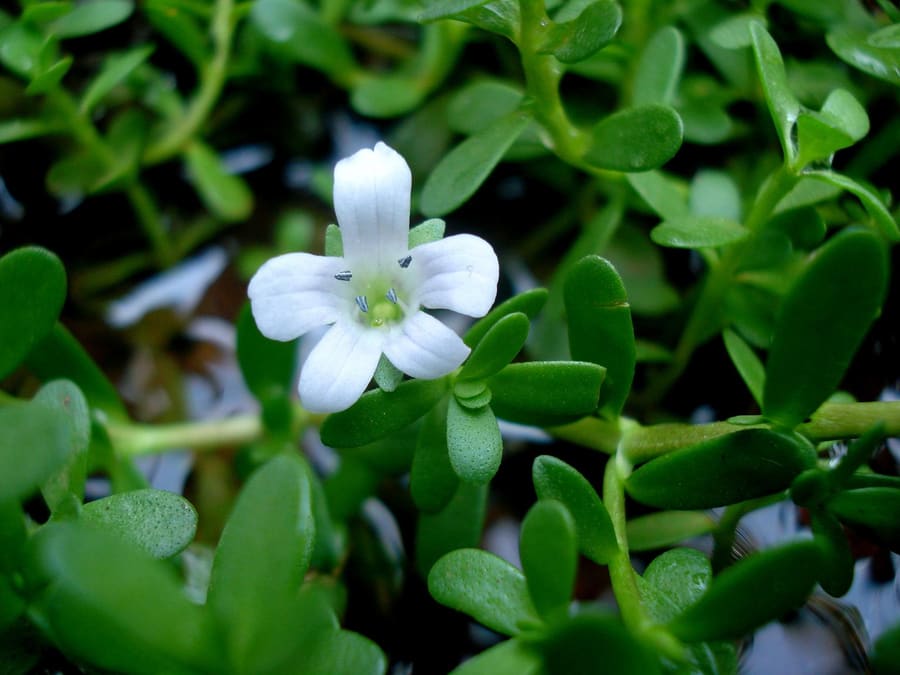
Bacopa, also known as Water Hyssop or Brahmi, is a creeping succulent perennial that can grow to about 20 inches. It features spatula-shaped fleshy leaves and pale blue or white flowers on slender stalks. Thriving in marshlands and along the edges of mangrove swamps in warmer temperate and tropical climates - especially southern Asia - it develops into dense mats on mudflats. This herb has been a cornerstone of Ayurvedic medicine for supporting cognitive function and treating various nervous system disorders, and it is increasingly recognized in Western herbalism for its brain-enhancing properties.
 Elecampane (Inula helenium)
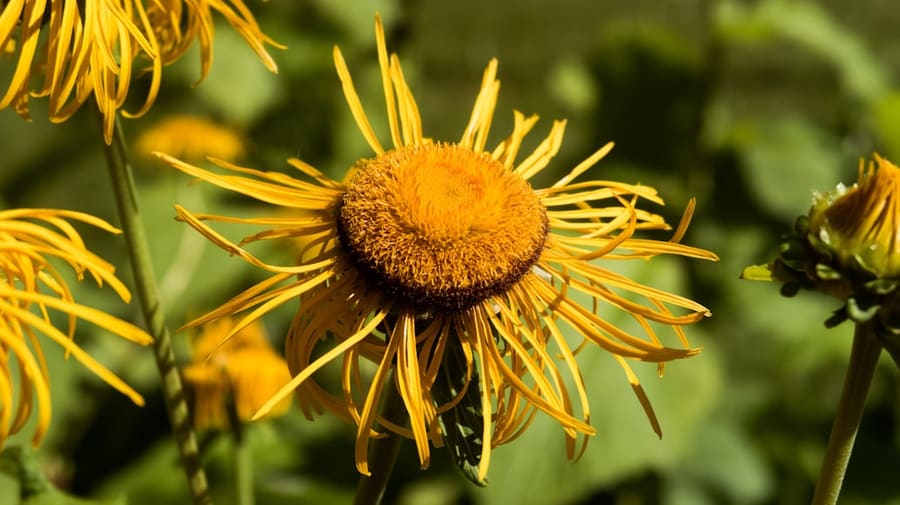
Elecampane (Inula helenium), a perennial reaching up to 10 ft (3 m), produces bright, yellow daisy-like flowers and broad, pointed leaves. Revered since Roman times, it was linked to Helen of Troy in Greek legend. The root is gently warming, especially valuable for chronic respiratory irritation or infection, as it soothes bronchial linings and encourages phlegm expulsion. It also contains inulin, a prebiotic supporting healthy gut flora.
 Eucalyptus (Eucalyptus globulus)
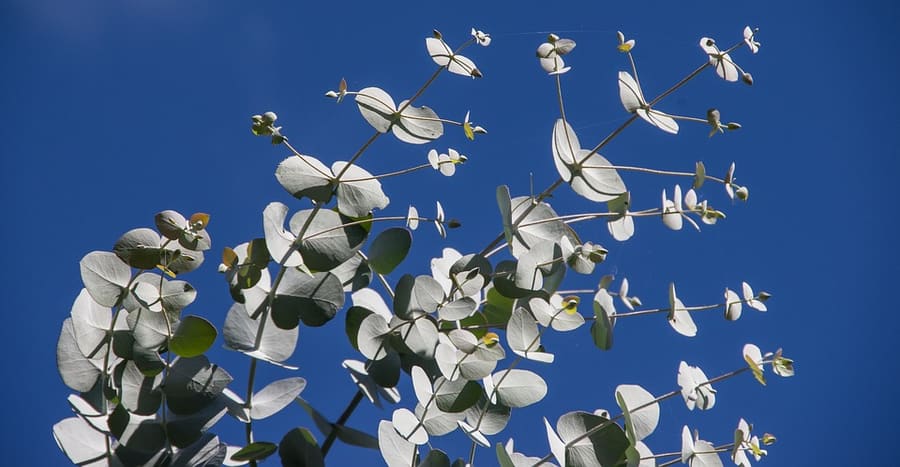
Eucalyptus, a traditional Aboriginal remedy, is a powerful antiseptic used all over the world for relieving coughs and colds, sore throats, and other infections. It is warming and stimulating, and for many people its scent conjures up days spent in bed during childhood with eucalyptus and other oils smothered on the chest. Eucalpytus is a common ingredient in many over-the-counter cold remedies.
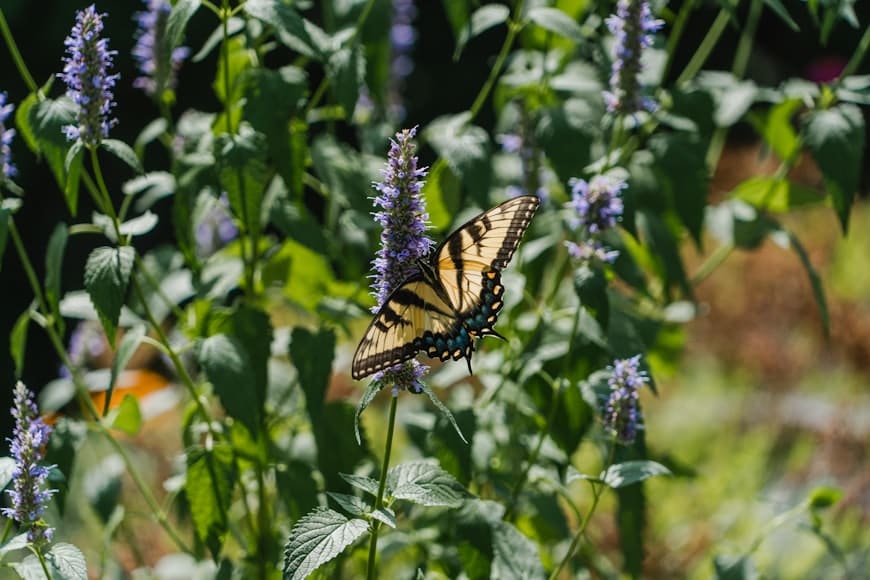 Hyssop (Hyssopus officinalis)
Hyssop (Hyssopus officinalis) is a semi-evergreen shrub growing up to about 2 ft (60 cm), with narrow leaves and clusters of bright blue, two-lipped flowers. Known since ancient times as a “cure-all” for respiratory ailments, it clears congested phlegm and supports recovery from infections. Hyssop also has antiseptic qualities beneficial for cuts, abrasions, and insect bites.
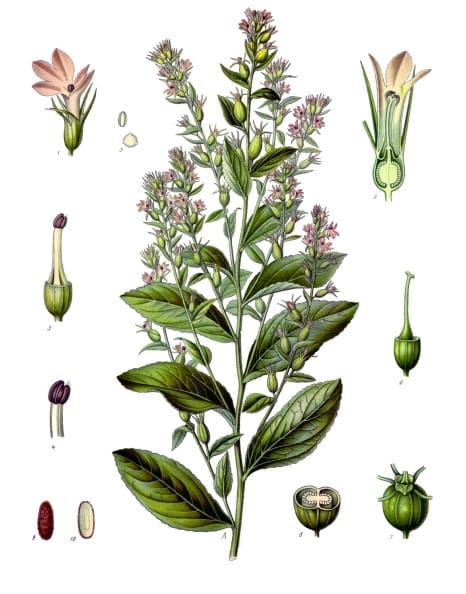 Lobelia (Lobelia inflata)Not for self-dosing
Lobelia is an annual herb growing to 20 inches with lance-shaped leaves and pale blue, pink-tinged flowers. A powerful antispasmodic used for respiratory and muscle disorders, it was a traditional Native American remedy for many conditions. It was used as a 'puke weed' to induce vomiting, as a remedy for worms and venereal disease, and as an expectorant. Lobelia was also smoked as a substitute for tobacco and was reputed to share some of its magical qualities. Indigenous to North America, especially eastern parts of the United States, it grows by roadsides and in neglected areas, preferring acid soil. The aerial parts are harvested in early autumn when the seed capsules are most numerous and are carefully dried. Its use was later championed by the American herbalist Samuel Thomson (1769-1843), who made the herb the mainstay of his therapeutic system, mainly using it to induce vomiting.
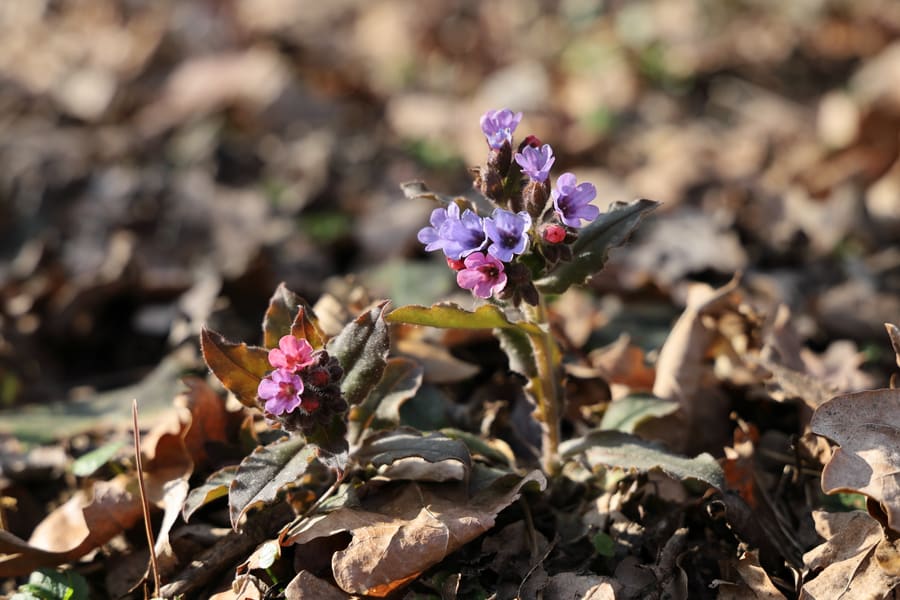 Lungwort (Pulmonaria officinalis)
Lungwort is a perennial herb growing to 1 foot with broad oval basal leaves, smaller upper leaves mottled with white spots, and clusters of pink-purple flowers. Native to Europe and the Caucasus, it flourishes in mountain pastures and damp sites. The leaves are gathered in late spring. According to the medieval Doctrine of Signatures, which held that a plant's appearance pointed to the ailment it treated, lungwort was effective for chest ailments because its leaves were said to resemble lung tissue. This folk belief, while not scientifically founded, turned out to have merit - the herb is indeed valuable for respiratory conditions.
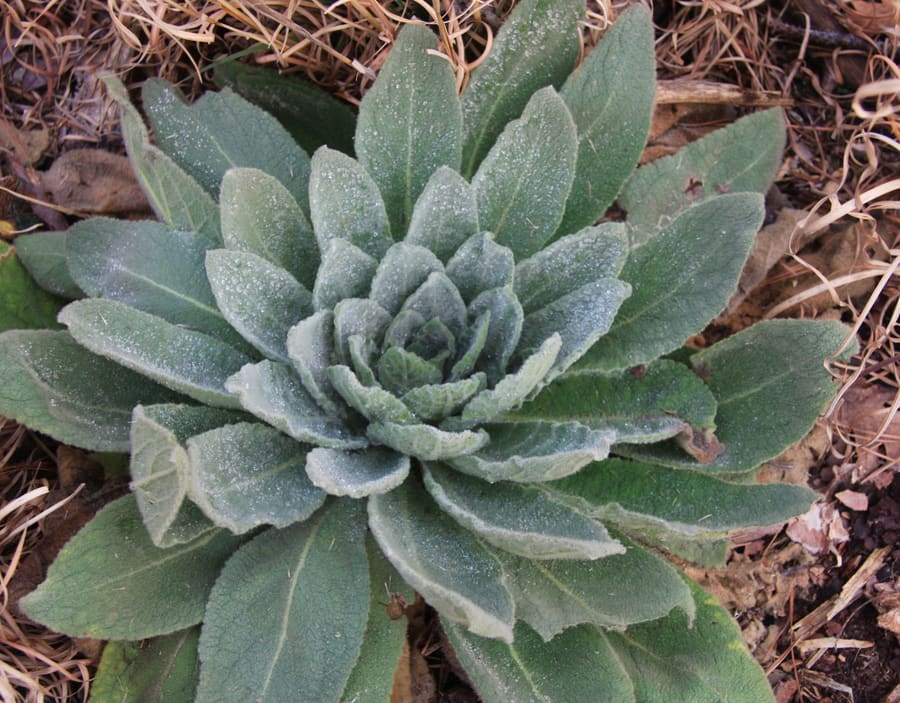 Mullein (Verbascum thapsus)
Mullein (Verbascum thapsus) is an upright biennial reaching up to about 6½ ft (2 m), with distinctive gray-green, oval to lance-shaped leaves that are softly hairy, and tall spikes of bright yellow flowers. Leaves and flowers both contain saponins that assist in loosening mucus, making mullein especially beneficial for respiratory conditions such as asthma, COPD, dry coughs, and congestion. Mullein root is specifically valued for lower back pain and inflammation.
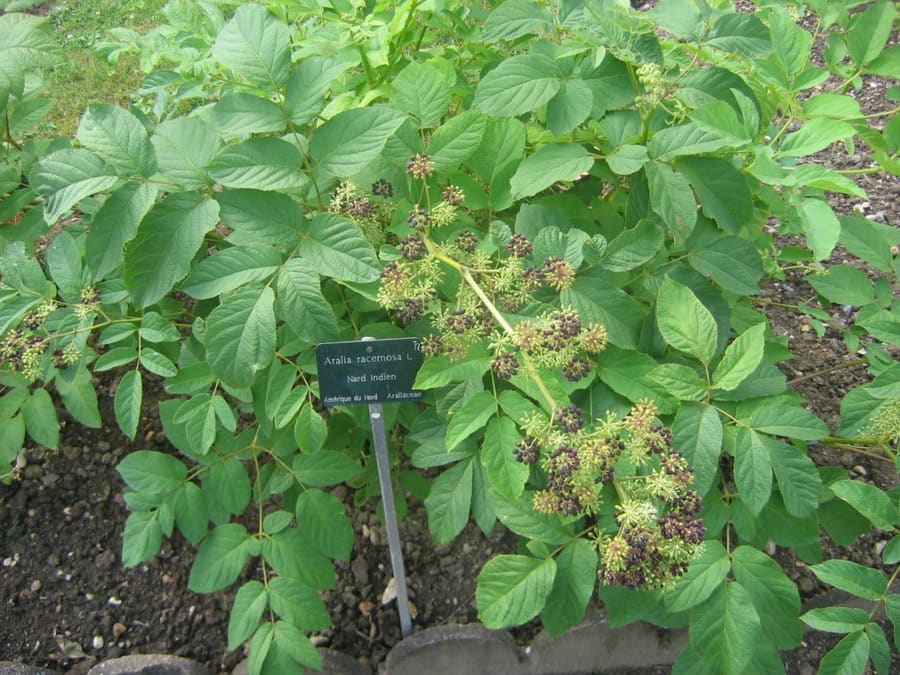 Spikenard (Aralia racemosa)
American spikenard (Aralia racemosa) is a tall, aromatic perennial bush up to about 6½ ft (2 m), with fleshy roots, large compound leaves, and clusters of greenish-white flowers followed by red or purple berries. Known for its warming, expectorant properties, spikenard is a tonic for weak or congested lungs.