
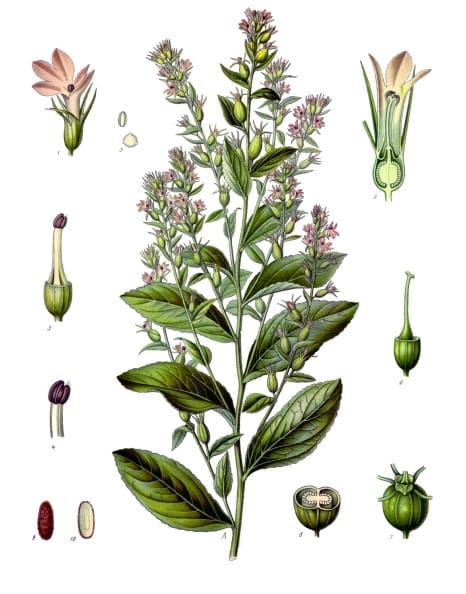
Lobelia (Lobelia inflata)
Photo: Franz Eugen Köhler, Köhler's Medizinal-Pflanzen · Public domain
- Respiratory
- 4 conditions
- Licensed photo
Overview
Lobelia is an annual herb growing to 20 inches with lance-shaped leaves and pale blue, pink-tinged flowers. A powerful antispasmodic used for respiratory and muscle disorders, it was a traditional Native American remedy for many conditions. It was used as a 'puke weed' to induce vomiting, as a remedy for worms and venereal disease, and as an expectorant. Lobelia was also smoked as a substitute for tobacco and was reputed to share some of its magical qualities. Indigenous to North America, especially eastern parts of the United States, it grows by roadsides and in neglected areas, preferring acid soil. The aerial parts are harvested in early autumn when the seed capsules are most numerous and are carefully dried. Its use was later championed by the American herbalist Samuel Thomson (1769-1843), who made the herb the mainstay of his therapeutic system, mainly using it to induce vomiting.
Traditional uses & properties
Lobelia is a powerful antispasmodic herb that dilates the bronchial passages to ease asthma attacks and relieves pain caused by tension. The whole herb is strongly antispasmodic, while its constituent lobeline stimulates the respiratory center within the brain stem, producing stronger and deeper breathing. A powerful antispasmodic and respiratory stimulant, lobelia is valuable for asthma - particularly bronchial asthma - and chronic bronchitis. The herb helps to relax the muscles of the smaller bronchial tubes, thereby opening the airways, stimulating breathing, and promoting the coughing up of phlegm. Laboratory investigations during the 1990s suggest that lobeline has antidepressant activity. In the Anglo-American herbal tradition, lobelia has always been combined with cayenne; the heating, stimulant action helps to push blood into areas that lobelia has relaxed. Some constituents, especially lobeline, break down rapidly in the body, and lobelia is often most effective applied externally. Its antispasmodic action helps to relax muscles, particularly smooth muscle, making it useful for sprains and back problems where muscle tension is a key factor. It helps clear lymphatic congestion and can be applied topically to insect bites and stings. The piperidine alkaloids, especially lobeline, have similar chemical effects to nicotine, and lobelia is employed by herbalists to help patients give up smoking.
Traditional preparations
Preparation amounts are not shown for this herb. It is toxic, restricted, or otherwise unsafe to self-dose - the margin between a traditional dose and a harmful one is too small to publish as reference material. If you are considering it, that conversation belongs with a doctor or a qualified practitioner, not a website.
Safety & precautions
Take only when prescribed by a medical herbalist or doctor and do not eat the fresh plant. Excessive ingestion is rare (vomiting normally occurs first) but can be fatal. Restricted herb in some countries. The FDA considers lobelia to be poisonous, and many sources claim it will cause convulsions, coma, and death. These are potential effects of its principal alkaloid lobeline, but there is no record of the whole herb causing these problems in anyone. Lobelia is an emetic and makes you throw up if you take too much. It can produce severe symptoms (nausea, profuse sweating, vomiting, and deep relaxation), but these symptoms typically pass quickly and the person feels better afterward. However, because of these effects, lobelia is not recommended for weak, debilitated persons or persons who are deeply relaxed. Not recommended for long-term use and should be used cautiously during pregnancy. To avoid unpleasant effects such as nausea and vomiting, use small, repeated doses instead of large, infrequent doses, or use it as part of a formula.
Drug & food interactions
Interaction data is not available for this herb - talk to a pharmacist before combining it with any medication. A blank entry here means we have not documented interactions, not that none exist.
Habitat
Indigenous to North America, especially eastern parts of the United States. Grows by roadsides and in neglected areas, preferring acid soil. The aerial parts are harvested in early autumn when the seed capsules are most numerous.
Traditionally used for
- Asthma14 herbs · 2 free
- Bronchitis17 herbs · 2 free
- Back pain5 herbs · 2 free
- Muscle Strain8 herbs · 2 free
Each condition shows its first 2 remedies free. Premium opens the full remedy list for every condition - or come back for the free Condition of the Day.
Frequently asked questions
What is Lobelia (Lobelia inflata) traditionally used for?
Traditional sources describe Lobelia (Lobelia inflata) as follows: Lobelia is a powerful antispasmodic herb that dilates the bronchial passages to ease asthma attacks and relieves pain caused by tension. The whole herb is strongly antispasmodic, while its constituent lobeline stimulates the respiratory center within the brain stem, producing stronger and deeper breathing. A powerful antispasmodic and respiratory stimulant, lobelia is valuable for asthma - particularly bronchial asthma - and chronic bronchitis. The herb helps to relax the muscles of the smaller bronchial tubes, thereby opening the airways, stimulating breathing, and promoting the coughing up of phlegm. Laboratory investigations during the 1990s suggest that lobeline has antidepressant activity. In the Anglo-American herbal tradition, lobelia has always been combined with cayenne; the heating, stimulant action helps to push blood into areas that lobelia has relaxed. Some constituents, especially lobeline, break down rapidly in the body, and lobelia is often most effective applied externally. Its antispasmodic action helps to relax muscles, particularly smooth muscle, making it useful for sprains and back problems where muscle tension is a key factor. It helps clear lymphatic congestion and can be applied topically to insect bites and stings. The piperidine alkaloids, especially lobeline, have similar chemical effects to nicotine, and lobelia is employed by herbalists to help patients give up smoking.
How is Lobelia (Lobelia inflata) prepared?
Preparation amounts are not shown for this herb. It is toxic, restricted, or otherwise unsafe to self-dose - the margin between a traditional dose and a harmful one is too small to publish as reference material. If you are considering it, that conversation belongs with a doctor or a qualified practitioner, not a website.
What safety cautions apply to Lobelia (Lobelia inflata)?
Take only when prescribed by a medical herbalist or doctor and do not eat the fresh plant. Excessive ingestion is rare (vomiting normally occurs first) but can be fatal. Restricted herb in some countries. The FDA considers lobelia to be poisonous, and many sources claim it will cause convulsions, coma, and death. These are potential effects of its principal alkaloid lobeline, but there is no record of the whole herb causing these problems in anyone. Lobelia is an emetic and makes you throw up if you take too much. It can produce severe symptoms (nausea, profuse sweating, vomiting, and deep relaxation), but these symptoms typically pass quickly and the person feels better afterward. However, because of these effects, lobelia is not recommended for weak, debilitated persons or persons who are deeply relaxed. Not recommended for long-term use and should be used cautiously during pregnancy. To avoid unpleasant effects such as nausea and vomiting, use small, repeated doses instead of large, infrequent doses, or use it as part of a formula.
Related herbs
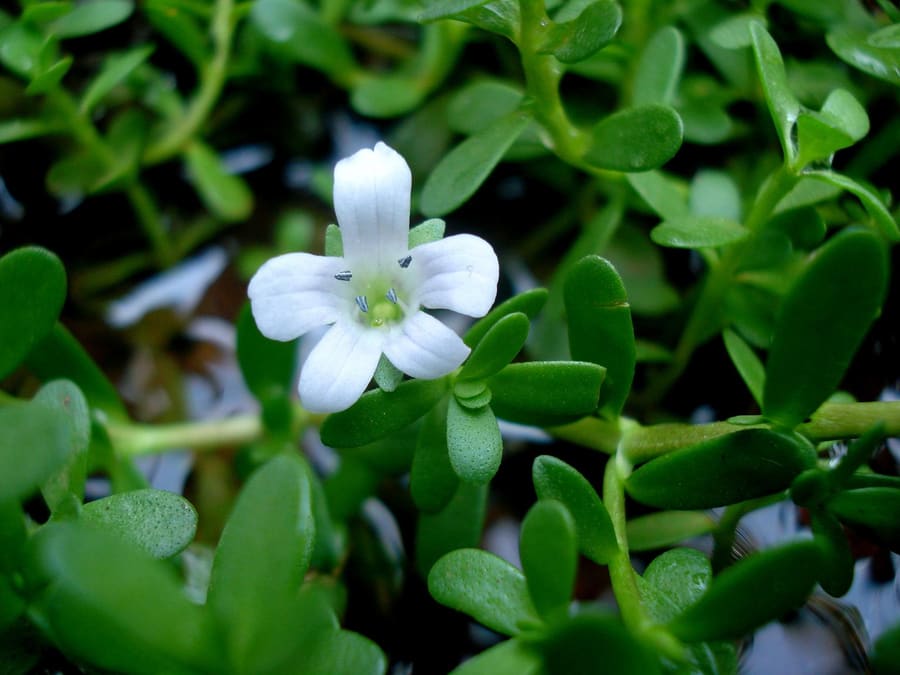 Bacopa (Bacopa monnieri)
Bacopa, also known as Water Hyssop or Brahmi, is a creeping succulent perennial that can grow to about 20 inches. It features spatula-shaped fleshy leaves and pale blue or white flowers on slender stalks. Thriving in marshlands and along the edges of mangrove swamps in warmer temperate and tropical climates - especially southern Asia - it develops into dense mats on mudflats. This herb has been a cornerstone of Ayurvedic medicine for supporting cognitive function and treating various nervous system disorders, and it is increasingly recognized in Western herbalism for its brain-enhancing properties.
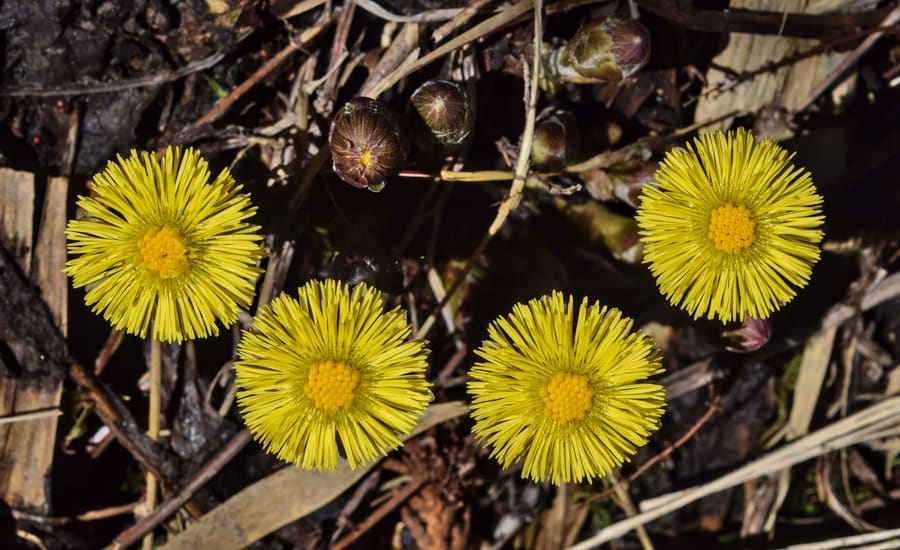 Coltsfoot (Tussilago farfara)Not for self-dosing
Coltsfoot is a perennial herb growing to 12 inches with flowering stems covered in purple scales, yellow-gold flowers, and heart-shaped leaves. Indigenous to Europe and northern Asia and naturalized in North America, it is commonly found along roadsides, on verges, and in open areas. The flowers are gathered in late winter, and the leaves in summer. For at least 2,500 years, coltsfoot has been taken as a cough remedy and smoked to ease breathing. The Greek physician Dioscorides in the 1st century CE recommended it for dry coughs and 'for those who are unable to breathe except standing upright.'
- Corydalis (Corydalis yanhusuo)
Corydalis is a small herbaceous perennial growing to 8 inches with narrow leaves and pink flowers. Native to Siberia, northern China, and Japan, it is commonly cultivated in eastern and northeastern parts of China. Propagated from seed in early spring or autumn, the rhizome is harvested in late spring and early summer when the aerial parts have withered. This important Chinese remedy has been used at least since the 8th century to help 'invigorate the blood' and relieve almost any painful condition, particularly menstrual cramps and chest and abdominal pain.
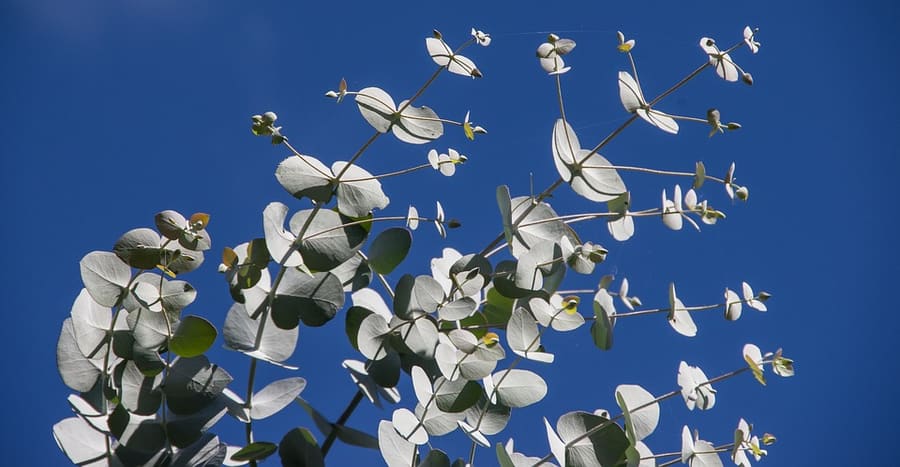 Eucalyptus (Eucalyptus globulus)
Eucalyptus, a traditional Aboriginal remedy, is a powerful antiseptic used all over the world for relieving coughs and colds, sore throats, and other infections. It is warming and stimulating, and for many people its scent conjures up days spent in bed during childhood with eucalyptus and other oils smothered on the chest. Eucalpytus is a common ingredient in many over-the-counter cold remedies.
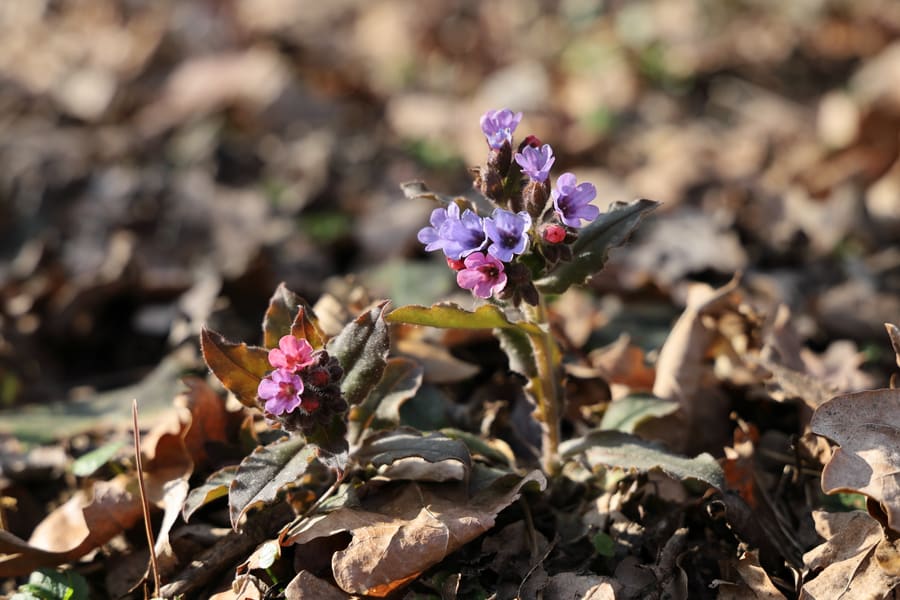 Lungwort (Pulmonaria officinalis)
Lungwort is a perennial herb growing to 1 foot with broad oval basal leaves, smaller upper leaves mottled with white spots, and clusters of pink-purple flowers. Native to Europe and the Caucasus, it flourishes in mountain pastures and damp sites. The leaves are gathered in late spring. According to the medieval Doctrine of Signatures, which held that a plant's appearance pointed to the ailment it treated, lungwort was effective for chest ailments because its leaves were said to resemble lung tissue. This folk belief, while not scientifically founded, turned out to have merit - the herb is indeed valuable for respiratory conditions.
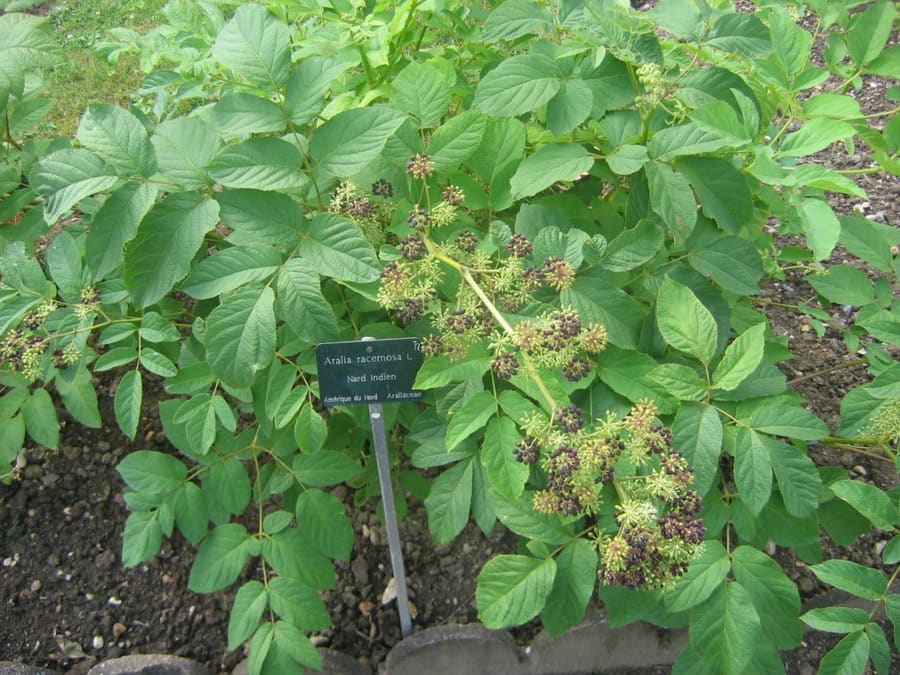 Spikenard (Aralia racemosa)
American spikenard (Aralia racemosa) is a tall, aromatic perennial bush up to about 6½ ft (2 m), with fleshy roots, large compound leaves, and clusters of greenish-white flowers followed by red or purple berries. Known for its warming, expectorant properties, spikenard is a tonic for weak or congested lungs.
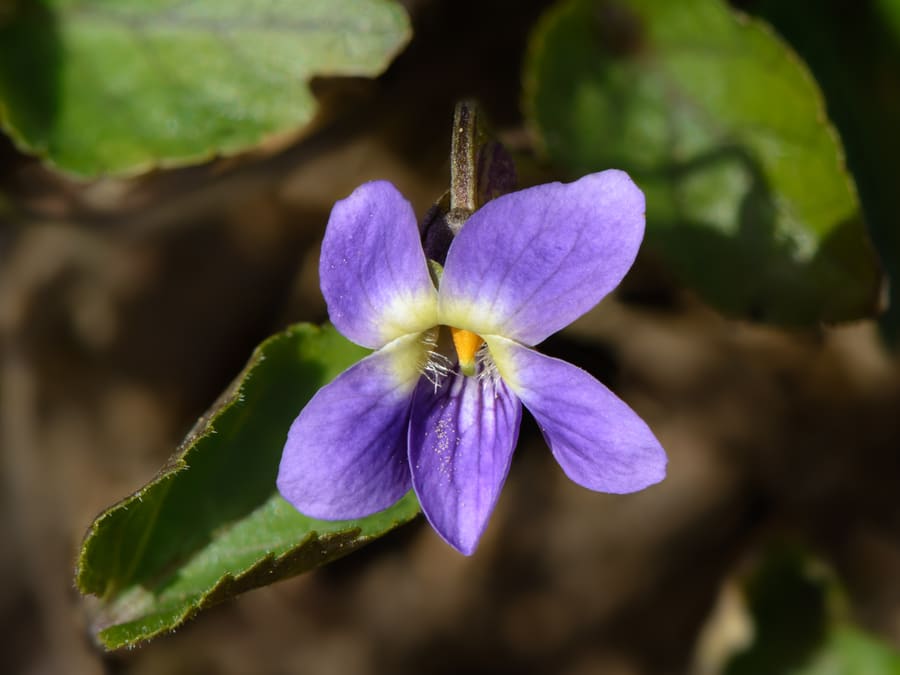 Violet (Viola odorata)
Sweet violet is a creeping perennial growing to 6 inches tall with toothed oval leaves and attractive violet-blue or white flowers with a five-petaled corolla. Native to much of Europe and Asia, it is a common wayside plant also found along roadsides and in woodlands. In classical mythology, sweet violet was associated with death, but classical physicians recognized it as an effective emetic and cough remedy. The 17th-century herbalist Nicholas Culpeper noted that violets are cooling and moistening when fresh and green.
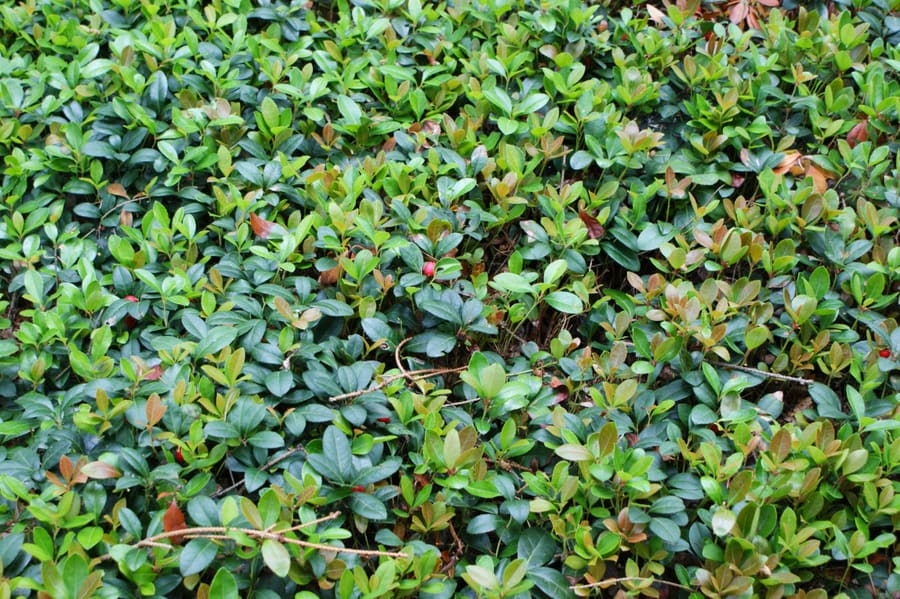 Wintergreen (Gaultheria procumbens)Not for self-dosing
Wintergreen (Gaultheria procumbens) is a low-lying evergreen shrub, reaching about 6 in (15 cm), with oval leathery leaves, small bell-shaped flowers, and bright red berries. Known primarily for its oil containing methyl salicylate - a natural anti-inflammatory and analgesic compound - it has long been used for topical pain relief.