
Herbs for Asthma
12 herbs traditionally used for this condition.
- Eucalyptus (Eucalyptus globulus)
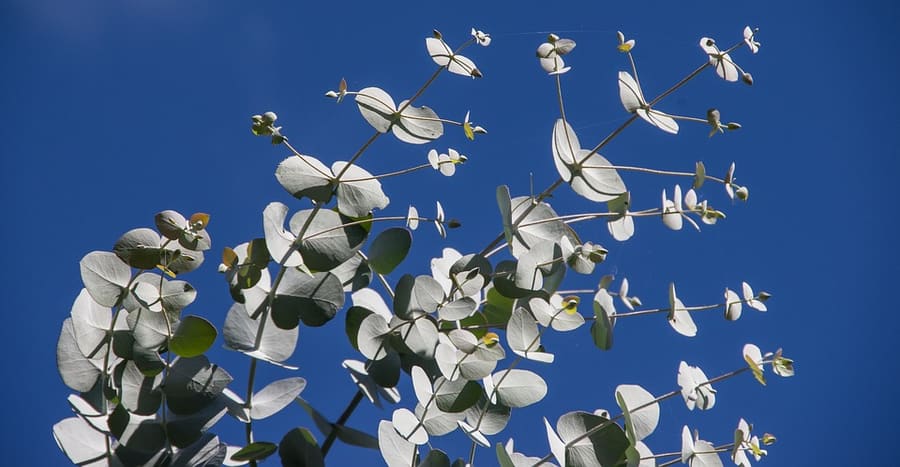
Eucalyptus, a traditional Aboriginal remedy, is a powerful antiseptic used all over the world for relieving coughs and colds, sore throats, and other infections. It is warming and stimulating, and for many people its scent conjures up days spent in bed during childhood with eucalyptus and other oils smothered on the chest. Eucalpytus is a common ingredient in many over-the-counter cold remedies.
- Hyssop (Hyssopus officinalis)
Hyssop (Hyssopus officinalis) is a semi-evergreen shrub growing up to about 2 ft (60 cm), with narrow leaves and clusters of bright blue, two-lipped flowers. Known since ancient times as a “cure-all” for respiratory ailments, it clears congested phlegm and supports recovery from infections. Hyssop also has antiseptic qualities beneficial for cuts, abrasions, and insect bites.
- Mullein (Verbascum thapsus)
Mullein (Verbascum thapsus) is an upright biennial reaching up to about 6½ ft (2 m), with distinctive gray-green, oval to lance-shaped leaves that are softly hairy, and tall spikes of bright yellow flowers. Leaves and flowers both contain saponins that assist in loosening mucus, making mullein especially beneficial for respiratory conditions such as asthma, COPD, dry coughs, and congestion. Mullein root is specifically valued for lower back pain and inflammation.
- Bacopa (Bacopa monnieri)
Bacopa, also known as Water Hyssop or Brahmi, is a creeping succulent perennial that can grow to about 20 inches. It features spatula-shaped fleshy leaves and pale blue or white flowers on slender stalks. Thriving in marshlands and along the edges of mangrove swamps in warmer temperate and tropical climates—especially southern Asia—it develops into dense mats on mudflats. This herb has been a cornerstone of Ayurvedic medicine for supporting cognitive function and treating various nervous system disorders, and it is increasingly recognized in Western herbalism for its brain-enhancing properties.
- Black Pepper (Piper nigrum)
Black pepper is a perennial woody climbing vine growing to about 16 feet, with large oval leaves, spikes of small white flowers, and clusters of small round fruits that ripen from green to red. Native to southwestern India and now cultivated in tropical areas worldwide, the fruit is harvested from plants that are at least three years old. Different processing methods yield green, black, red, and white peppercorns, each with distinct flavors and uses. Cultivated as both a spice and medicine since ancient times, pepper was such a prized commodity in world trade that Attila the Hun reportedly demanded 3,000 pounds of it as ransom during his siege of Rome in 408 CE.
- Cat's Claw (Uncaria tomentosa)
Cat's claw is a climbing vine that can grow to 100 feet or more, with stems up to 8 inches in diameter, large glossy leaves, and sharp hooks resembling a cat's claws. Native to tropical rainforests in the central and eastern Andes—especially Peru, Ecuador, and Colombia—it has also been found in Guatemala, Costa Rica, and Panama. Known by the Ashaninka and other indigenous peoples of central Peru for its power in regulating illness, it has been used since ancient times to treat serious conditions ranging from asthma and diabetes to arthritis and cancer. By the early 1990s, over-collection from the wild threatened the species' survival; only sustainably sourced stem bark should be used, rather than root bark.
- Codonopsis (Codonopsis pilosula)
Codonopsis is a small twining perennial growing to 5 feet with oval leaves and pendulous green and purple bell-shaped flowers marked with purple in summer. Native to northeastern China and growing throughout the region—especially in the Shanxi and Szechuan provinces—it is propagated from seed in spring or autumn, and the root is harvested in autumn once the aerial parts have died down. In Chinese herbal medicine, codonopsis holds a central place as a gentle tonic that increases energy levels, improves physical and mental well-being, and helps the body adapt to stress.
- Coltsfoot (Tussilago farfara)
Coltsfoot is a perennial herb growing to 12 inches with flowering stems covered in purple scales, yellow-gold flowers, and heart-shaped leaves. Indigenous to Europe and northern Asia and naturalized in North America, it is commonly found along roadsides, on verges, and in open areas. The flowers are gathered in late winter, and the leaves in summer. For at least 2,500 years, coltsfoot has been taken as a cough remedy and smoked to ease breathing. The Greek physician Dioscorides in the 1st century CE recommended it for dry coughs and 'for those who are unable to breathe except standing upright.'
- Lobelia (Lobelia inflata)
Lobelia is an annual herb growing to 20 inches with lance-shaped leaves and pale blue, pink-tinged flowers. A powerful antispasmodic used for respiratory and muscle disorders, it was a traditional Native American remedy for many conditions. It was used as a 'puke weed' to induce vomiting, as a remedy for worms and venereal disease, and as an expectorant. Lobelia was also smoked as a substitute for tobacco and was reputed to share some of its magical qualities. Indigenous to North America, especially eastern parts of the United States, it grows by roadsides and in neglected areas, preferring acid soil. The aerial parts are harvested in early autumn when the seed capsules are most numerous and are carefully dried. Its use was later championed by the American herbalist Samuel Thomson (1769–1843), who made the herb the mainstay of his therapeutic system, mainly using it to induce vomiting.
- Lungwort (Pulmonaria officinalis)
Lungwort is a perennial herb growing to 1 foot with broad oval basal leaves, smaller upper leaves mottled with white spots, and clusters of pink-purple flowers. Native to Europe and the Caucasus, it flourishes in mountain pastures and damp sites. The leaves are gathered in late spring. According to the medieval Doctrine of Signatures, which held that a plant's appearance pointed to the ailment it treated, lungwort was effective for chest ailments because its leaves were said to resemble lung tissue. This folk belief, while not scientifically founded, turned out to have merit—the herb is indeed valuable for respiratory conditions.
- Shatavari (Asparagus racemosus)
Shatavari is a slender perennial fern that can grow up to 23 feet in height, featuring fronds of needle-like leaves, tiny white flowers, and purple-black berries. Known as the 'Queen of herbs' in Ayurvedic medicine, its name literally means '100 spouses,' reflecting its reputation as a sexual tonic and fertility promoter. The root is the medicinal part used. Native to the Himalayas and Indian subcontinent, it grows wild in gravelly soils up to 3,900 feet above sea level and is also found in western China.
- Violet (Viola odorata)
Sweet violet is a creeping perennial growing to 6 inches tall with toothed oval leaves and attractive violet-blue or white flowers with a five-petaled corolla. Native to much of Europe and Asia, it is a common wayside plant also found along roadsides and in woodlands. In classical mythology, sweet violet was associated with death, but classical physicians recognized it as an effective emetic and cough remedy. The 17th-century herbalist Nicholas Culpeper noted that violets are cooling and moistening when fresh and green.