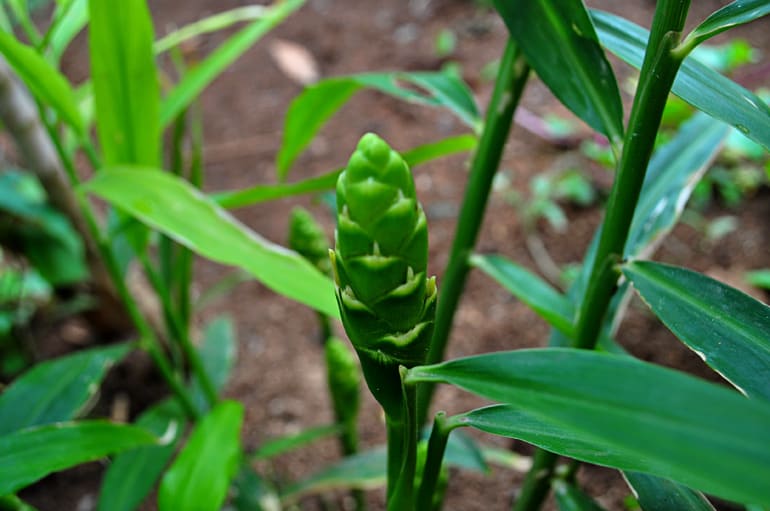
Ginger (Zingiber officinale)
Photo: Venkatx5 · CC BY-SA 3.0
- Digestive
- 2 conditions
- Licensed photo
Overview
Ginger (Zingiber officinale) is a perennial plant reaching about 2 ft (60 cm), with lance-shaped leaves and white or yellowish flower spikes. Its rhizome (underground stem) is pungent, aromatic, and widely esteemed as both a culinary spice and a potent herbal medicine. Ginger’s warming, anti-inflammatory qualities can ease many digestive and circulatory problems, as well as reduce pain from arthritis and menstrual cramps.
Traditional uses & properties
Antiemetic & Digestive Stimulant: Relieves nausea, motion sickness, gas, bloating, and aids nutrient absorption. Anti-Inflammatory & Analgesic: Research shows it can reduce pain in arthritis, menstrual cramps, and may help with migraines. Antiviral & Respiratory Support: Valuable for colds, flu, bronchial infections; encourages sweating and helps lower fevers. Circulatory Stimulant & Warming: Aids blood flow to extremities, easing chilblains and cold hands/feet.
Traditional preparations
Traditional texts describe the preparations below, and where those texts give specific amounts, the amounts are quoted here as part of that record. This is a record of historical practice, not a dosage recommendation - the figures are what the sources say, not what HerbMate tells you to take. Amounts, potency, and safe use vary enormously by preparation, plant part, and person.
Make a tincture and take 30 drops with water twice a day.
Safety & precautions
Ulcers & High Doses: Not advised in medicinal amounts for peptic ulcers; do not take essential oil internally except under professional supervision. Pregnancy & Blood-Thinners: While ginger is commonly used for morning sickness, doses above 2 g dried (4 g fresh) per day should be taken under supervision if pregnant or on anticoagulant medication. Gastric Irritation: May cause mild stomach upset; taking it with food can help.
Drug & food interactions
There are isolated cases of ginger increasing the response to anticoagulant treatment with warfarin and related drugs, but a controlled study did not confirm an interaction. A small study showed antiplatelet effects for ginger that were synergistic with those of nifedipine, but any effect needs confirming.
- Food
- No interactions found. Ginger is extensively used as a food ingredient.
- Nifedipine
- A small study found that antiplatelet effects for ginger were synergistic with those of nifedipine, but any effect needs confirmation.
- Anticoagulants
- Evidence from pharmacological studies suggests that ginger does not increase the anticoagulant effect of warfarin, nor does it alter coagulation or platelet aggregation on its own. However, two case reports describe markedly raised INRs with phenprocoumon and warfarin, which were associated with eating dried ginger and drinking ginger tea. A prospective, longitudinal study also reports an increased risk of self-reported bleeding events in patients taking warfarin and ginger. In a randomised, crossover study in 12 healthy subjects, 3 ginger capsules taken three times daily for 2 weeks did not affect either the pharmacokinetics or pharmacodynamics (INR) of a single 25-mg dose of warfarin taken on day 7. The brand of ginger used was Blackmores Travel Calm Ginger, each capsule containing an extract equivalent to 400 mg of ginger rhizome powder. Moreover, ginger alone did not affect the INR or platelet aggregation. However, a case report describes a rise in INR to greater than 10, with epistaxis, in a woman stabilised on phenprocoumon several weeks after she started to eat ginger regularly in the form of pieces of dried ginger and tea from ginger powder. She was eventually restabilised on the original dose of phenprocoumon, and was advised to stop taking ginger. Another very similar case has been described in a woman taking warfarin. Moreover, in a prospective, longitudinal study of patients taking warfarin and a herbal product or dietary supplement, there was a statistically significant increased risk of self-reported bleeding events in patients taking warfarin and ginger (7 bleeds in 25 weeks, none of which was major: odds ratio 3.2). No elevated INRs were reported for the combination. Note that the number of patients taking ginger was not reported, except to say it was less than 5% of 171 - so it was less than 8 patients. Also, the ginger products used were not mentioned and some patients were taking more than one potentially interacting supplement.
- Herbal medicines
- No interactions found.
These entries keep the wording of the reference they come from, and three phrases mean three different things. "No interactions found" means the source looked for reports of that pairing and found none. "No data found" means nothing has been published either way. "Based on experimental evidence only" means the effect has been seen in a laboratory or animal study but not in people - a reason for caution, not a report of harm.
Habitat
Native to Asia, ginger is cultivated throughout the tropics, thriving in fertile soil with ample rainfall. It is grown from rootstock divisions. The rhizomes are dug up around 10 months after planting, then washed, dried, and sometimes peeled or boiled.
Traditionally used for
Each condition shows its first 2 remedies free. Premium opens the full remedy list for every condition - or come back for the free Condition of the Day.
Frequently asked questions
What is Ginger (Zingiber officinale) traditionally used for?
Traditional sources describe Ginger (Zingiber officinale) as follows: Antiemetic & Digestive Stimulant: Relieves nausea, motion sickness, gas, bloating, and aids nutrient absorption. Anti-Inflammatory & Analgesic: Research shows it can reduce pain in arthritis, menstrual cramps, and may help with migraines. Antiviral & Respiratory Support: Valuable for colds, flu, bronchial infections; encourages sweating and helps lower fevers. Circulatory Stimulant & Warming: Aids blood flow to extremities, easing chilblains and cold hands/feet.
How is Ginger (Zingiber officinale) prepared?
Traditional texts describe the preparations below, and where those texts give specific amounts, the amounts are quoted here as part of that record. This is a record of historical practice, not a dosage recommendation - the figures are what the sources say, not what HerbMate tells you to take. Amounts, potency, and safe use vary enormously by preparation, plant part, and person. Indigestion: Make a tincture and take 30 drops with water twice a day.
What safety cautions apply to Ginger (Zingiber officinale)?
Ulcers & High Doses: Not advised in medicinal amounts for peptic ulcers; do not take essential oil internally except under professional supervision. Pregnancy & Blood-Thinners: While ginger is commonly used for morning sickness, doses above 2 g dried (4 g fresh) per day should be taken under supervision if pregnant or on anticoagulant medication. Gastric Irritation: May cause mild stomach upset; taking it with food can help.
Related herbs
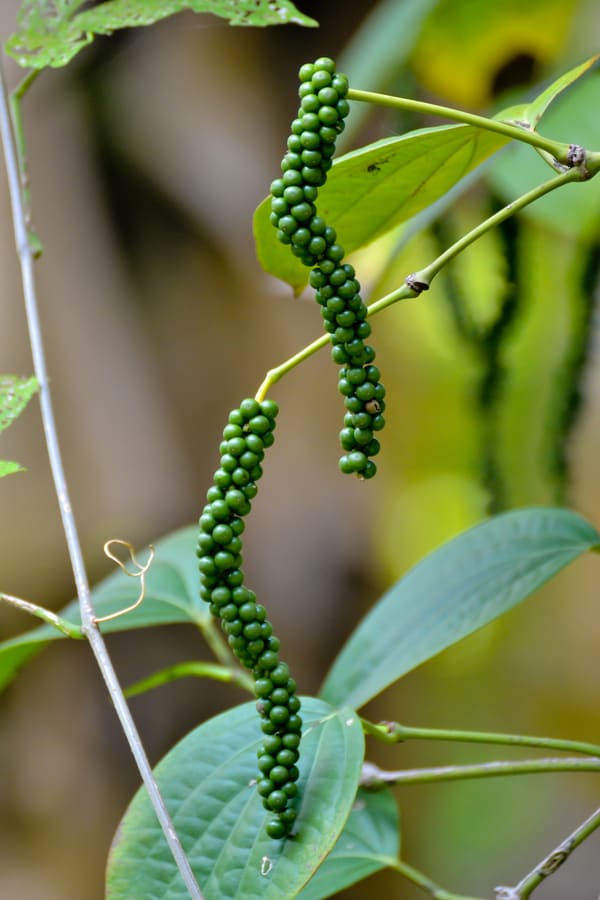 Black Pepper (Piper nigrum)
Black pepper is a perennial woody climbing vine growing to about 16 feet, with large oval leaves, spikes of small white flowers, and clusters of small round fruits that ripen from green to red. Native to southwestern India and now cultivated in tropical areas worldwide, the fruit is harvested from plants that are at least three years old. Different processing methods yield green, black, red, and white peppercorns, each with distinct flavors and uses. Cultivated as both a spice and medicine since ancient times, pepper was such a prized commodity in world trade that Attila the Hun reportedly demanded 3,000 pounds of it as ransom during his siege of Rome in 408 CE.
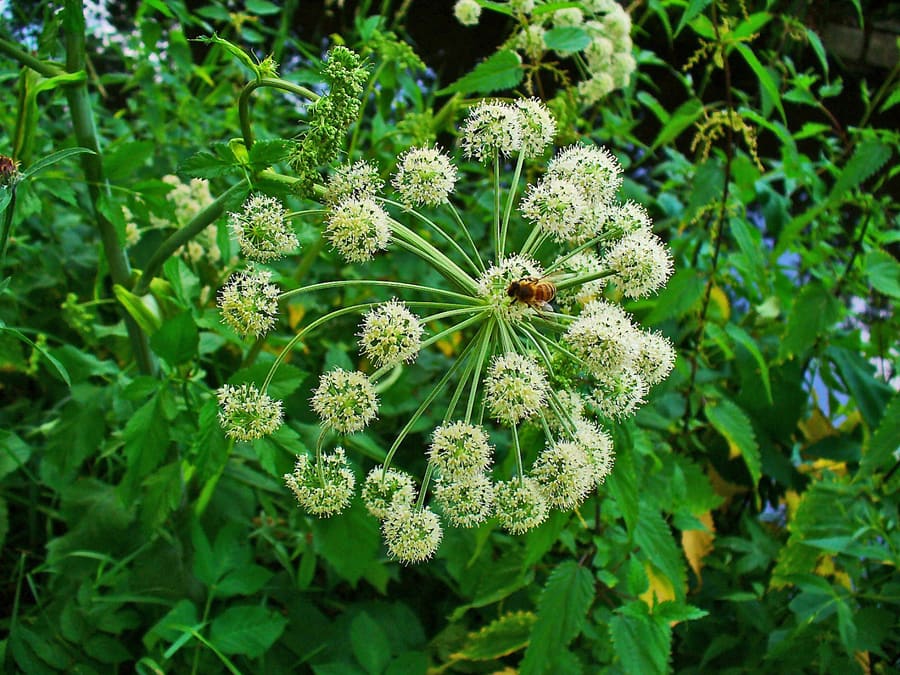 Angelica (angelica archangelica)
Angelica (Angelica archangelica) is a large, aromatic biennial herb growing up to about 6½ ft (2 m), with ridged hollow stems, bright green divided leaves, and greenish-white flowers arranged in umbrella-like clusters (umbels). It has a warm, tonic character and is often compared to dong quai (Chinese angelica) for its usefulness in supporting women’s health and circulation. Traditional sources note its warming action on the stomach, spleen, and intestines.
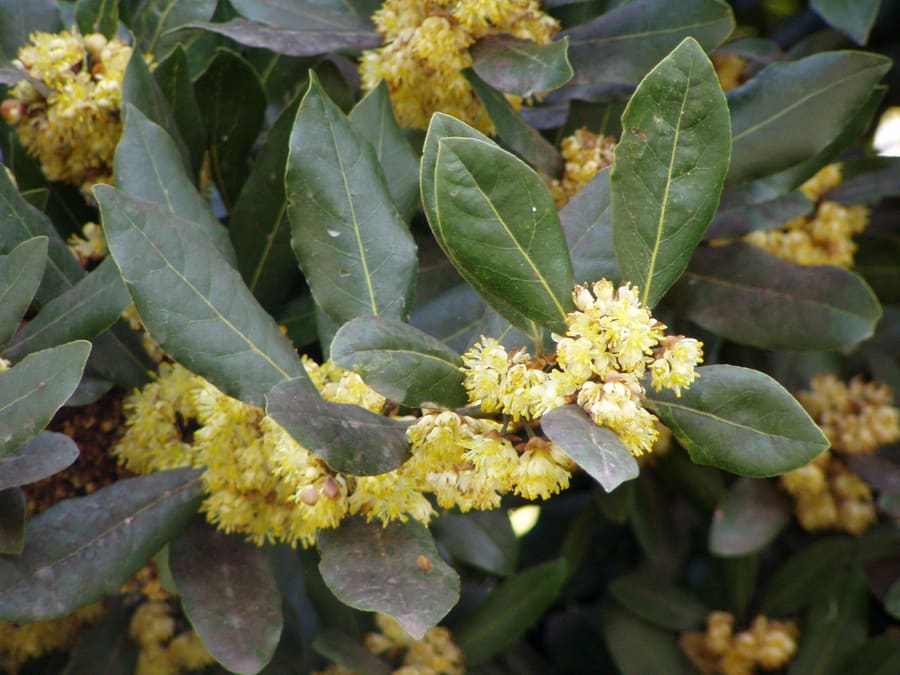 Bay laurel (Laurus nobilis)
Bay laurel (Laurus nobilis) is an aromatic evergreen shrub or small tree that can grow up to about 65 ft (20 m). It features leathery, dark green, lance-shaped leaves, small yellow flowers, and shiny black berries. The plant is well known for its culinary use (“bay leaves”) as well as its medicinal history in ancient Greece and Rome.
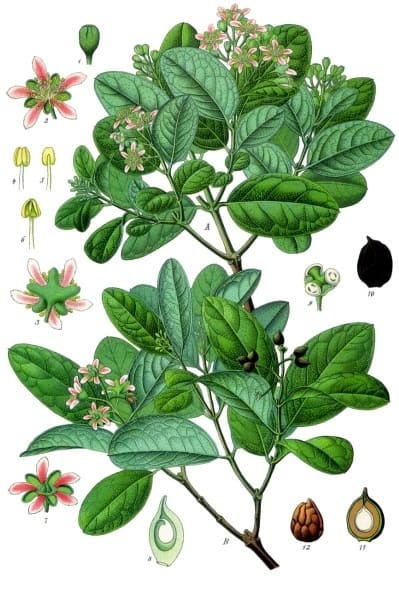 Boldo (Peumus boldus)Not for self-dosing
Boldo is a strongly aromatic multi-branched evergreen shrub or tree growing to 20 feet. It has egg-shaped leathery leaves with a lemony scent, clusters of white or yellow bell-shaped flowers, and small yellow berries. Native to Chile and Peru, it has become naturalized in the Mediterranean region and the West Coast of North America, where it grows on dry sunny slopes and in mountain pastures in the Andes. It is widely cultivated, and its leaves are gathered throughout the year. Boldo is a valued remedy in Latin American herbal medicine and is used by the Araucanian people in Chile as a tonic.
 Caraway (Carum carvi)
Caraway is an aromatic annual herb growing to 2 feet with a ridged stem, feathery leaves, and umbels of white flowers in midsummer. Exploding capsules release two small narrow seeds. It grows wild in Europe, North Africa, and Asia, preferring sunny sites up to 6,600 feet above sea level. Cultivated in Europe, Russia, North Africa, and the United States, the seeds are harvested ripe in late summer. Caraway has been valued since ancient times for its digestive and respiratory benefits, and the seeds are commonly used in cooking.
- Cardamom (Eletteria cardamomum)
Cardamom is an aromatic spice long prized for its fragrant, pungent taste. In Ayurvedic medicine, it has been used for digestive complaints - soothing indigestion, gas, and cramping - and is sometimes employed for respiratory conditions and kidney ailments. Cardamom has a centuries-old reputation as an aphrodisiac and is also believed to help relieve stress and depression when prepared in a mild infusion. Thanks to its agreeable flavor, cardamom is often added to herbal formulas to improve taste.
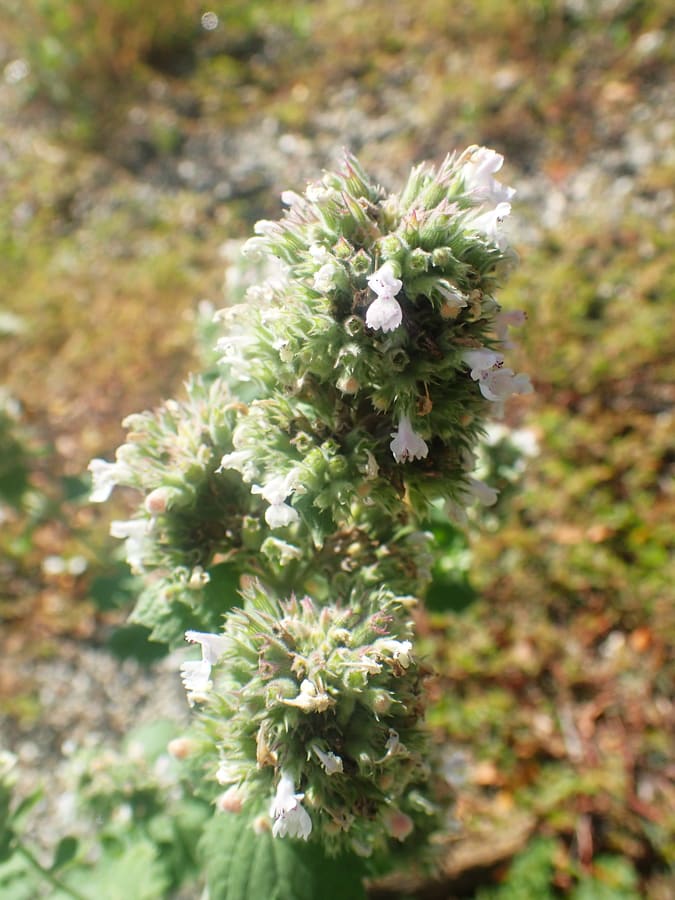 Catnip (Nepeta cataria)
Catnip is a downy, aromatic perennial growing to 3 feet with heart-shaped, gray-green leaves and whorls of white flowers marked with purple spots. Native to Europe and naturalized in North America, it grows in dry wayside places and mountainous regions up to altitudes of 5,000 feet. The plant is gathered when in flower during summer and autumn. Its name comes from the Norse word 'dylla,' meaning 'to soothe,' reflecting its calming properties. Catnip has an excitatory effect on cats but a sedative effect on humans.
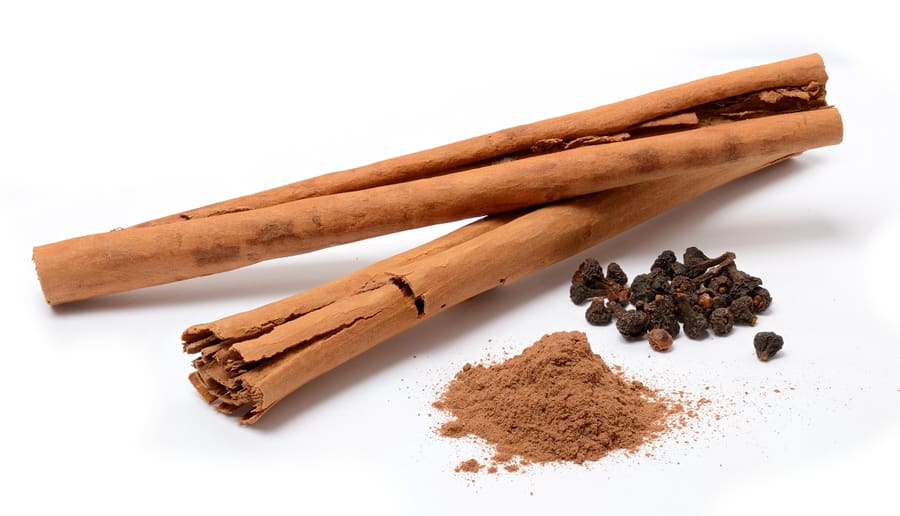 Cinnamon (Cinnamomum verum)
Cinnamon (Cinnamomum verum or C. zeylanicum) is a small evergreen tree, prized for its fragrant, sweet-spicy bark. Used for centuries as a warming stimulant in Ayurveda and traditional Chinese medicine, cinnamon supports digestion, circulation, and blood-sugar balance. Modern research confirms its ability to boost insulin sensitivity and possibly reduce high blood glucose in type 2 diabetes.