
Herbs for Fever
10 herbs traditionally used for this condition.
- Yarrow (Achillea millefolium)
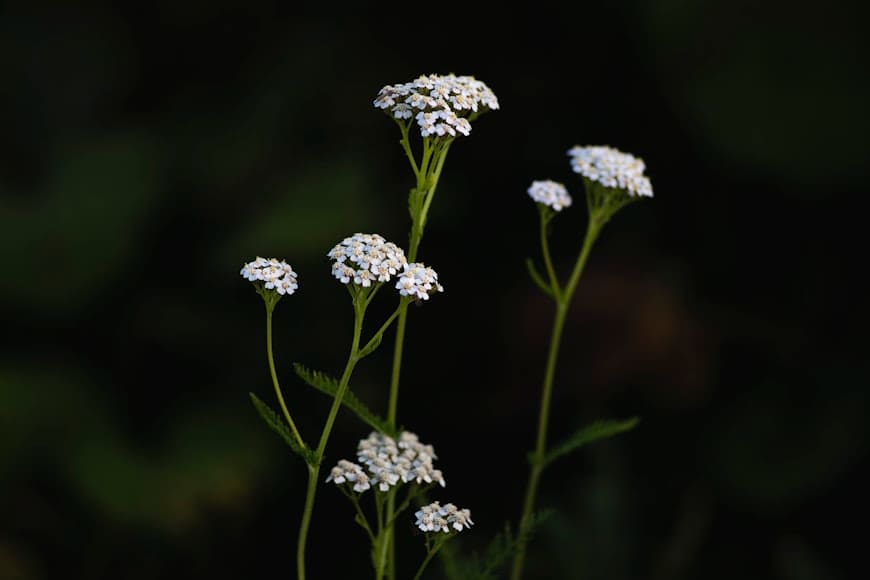
Yarrow (Achillea millefolium) is a creeping perennial, up to 3 ft (1 m) tall, featuring feathery, finely divided leaves and flat-topped clusters of white or pale pink flower heads. Renowned since ancient times as a wound herb and fever remedy, yarrow is an all-purpose herb for circulatory health, cold & flu support, and menstrual regulation.
- Boneset (Eupatorium perfoliatum)
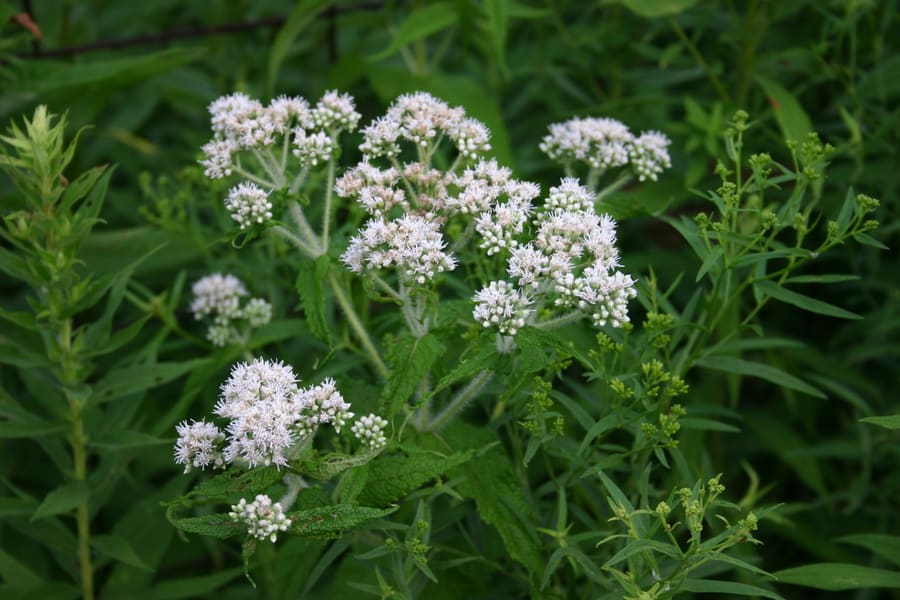
Boneset (Eupatorium perfoliatum) is a bitter-tasting, upright perennial that can reach about 5 ft (1.5 m). It has lance-shaped leaves and clusters of small white or sometimes purple florets. Renowned in traditional American herbal medicine for colds, fevers, and influenza—especially when body aches are severe—it is believed to stimulate white blood cell activity and encourage sweating, thereby reducing fever and supporting the immune response.
- Nettle (Urtica dioica)
Stinging nettle (Urtica dioica) is a perennial growing up to about 5 ft (1.5 m), recognized by its lance-shaped, serrated leaves and tiny greenish flowers. Though capable of “stinging,” nettle leaves and seeds are rich in protein, minerals, vitamins, and have a broad range of therapeutic effects, from anti-allergenic to diuretic.
- Elder (Sambucus nigra)
Elder (Sambucus nigra in Europe) is a deciduous tree that can reach 33 ft (10 m), bearing cream-colored clusters of flowers and dark blue-black berries. Rich in folklore, elder was historically believed to house a protective spirit (“Elder Mother”). Medicinally, both its flowers and berries have notable antiviral properties and can promote sweating to reduce fevers. The flowers also help relieve nasal congestion, while the berries act as a mild laxative and further support the immune system.
- Sweet Annie (Artemisia annua)
Sweet Annie (Artemisia annua), or qing hao, is an aromatic annual in the daisy family with finely divided, feathery leaves and small yellowish flower heads. Celebrated for containing artemisinin, it’s a potent antimalarial remedy, also showing antibacterial and antiparasitic properties.
- Andrographis (Andrographis paniculata)
Andrographis, commonly known as Green Chiretta or King of Bitters, is an upright annual herb reaching approximately 3 feet in height. Native to India and cultivated throughout northern regions of India and China, this bitter medicinal plant has been valued in Ayurvedic and traditional Chinese medicine for centuries. Historically used primarily for liver support and treating infections—especially malaria—it has earned recognition for its powerful immune-boosting and protective properties. The plant thrives on plains and in forest undergrowth, where its spotted pale brown or purple flowers and long seed capsules distinguish it from other medicinal herbs.
- Black Pepper (Piper nigrum)
Black pepper is a perennial woody climbing vine growing to about 16 feet, with large oval leaves, spikes of small white flowers, and clusters of small round fruits that ripen from green to red. Native to southwestern India and now cultivated in tropical areas worldwide, the fruit is harvested from plants that are at least three years old. Different processing methods yield green, black, red, and white peppercorns, each with distinct flavors and uses. Cultivated as both a spice and medicine since ancient times, pepper was such a prized commodity in world trade that Attila the Hun reportedly demanded 3,000 pounds of it as ransom during his siege of Rome in 408 CE.
- Catnip (Nepeta cataria)
Catnip is a downy, aromatic perennial growing to 3 feet with heart-shaped, gray-green leaves and whorls of white flowers marked with purple spots. Native to Europe and naturalized in North America, it grows in dry wayside places and mountainous regions up to altitudes of 5,000 feet. The plant is gathered when in flower during summer and autumn. Its name comes from the Norse word 'dylla,' meaning 'to soothe,' reflecting its calming properties. Catnip has an excitatory effect on cats but a sedative effect on humans.
- Mulberry Leaf (Morus alba)
White mulberry is a deciduous tree cultivated for over 5,000 years, primarily known as the preferred food source for silkworms. The leaves contain flavonoids with antioxidant properties along with vitamins A, B1, B2, and C. In traditional Chinese medicine, mulberry leaves have been valued for their expectorant and fever-reducing properties.
- Pleurisy Root (Asclepias tuberosa)
Pleurisy root is an upright perennial herb growing to 3 feet tall, featuring narrow lance-shaped leaves and spikes of orange or yellow five-petaled flowers. Native to the southern United States, this plant was considered a cure-all in North American herbal medicine. Native American tribes, including the Omaha, used the raw root for bronchitis and chest conditions, while many tribes regarded it as an effective remedy for hot, dry fevers. The root is harvested in spring.