
Herbs for Cold and Flu
13 herbs traditionally used for this condition.
- Mullein (Verbascum thapsus)
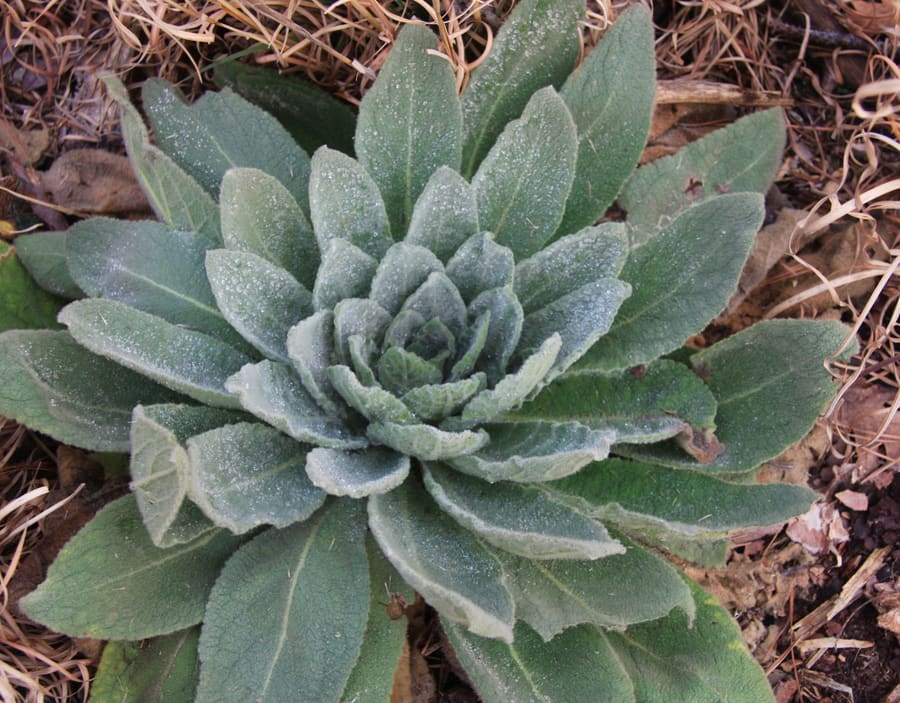
Mullein (Verbascum thapsus) is an upright biennial reaching up to about 6½ ft (2 m), with distinctive gray-green, oval to lance-shaped leaves that are softly hairy, and tall spikes of bright yellow flowers. Leaves and flowers both contain saponins that assist in loosening mucus, making mullein especially beneficial for respiratory conditions such as asthma, COPD, dry coughs, and congestion. Mullein root is specifically valued for lower back pain and inflammation.
- Echinacea (Echinacea spp.)
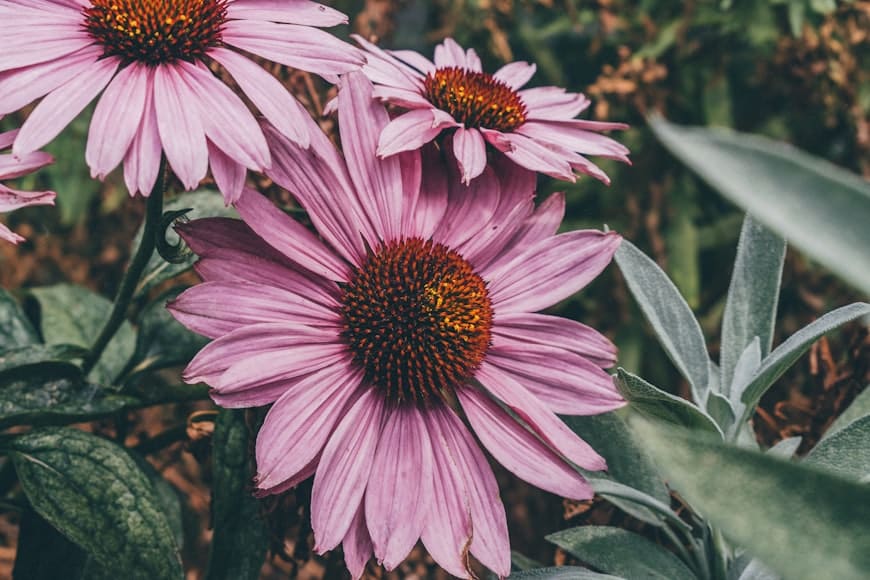
Echinacea (especially E. angustifolia and E. purpurea) is a tall, upright perennial prized for its immune-boosting properties. Known historically as “Indian Snakeroot,” it was valued by 19th-century Americans for treating snake bites. Its benefits are largely credited to compounds that enhance antibody formation, stimulate white blood cell production, and inhibit hyaluronidase (an enzyme facilitating the spread of infection). Echinacea also supports lymphatic function and can help counter viral infections. While often used for colds and flu, it may be overused for these conditions when other herbs might be equally effective.
- Eucalyptus (Eucalyptus globulus)
Eucalyptus, a traditional Aboriginal remedy, is a powerful antiseptic used all over the world for relieving coughs and colds, sore throats, and other infections. It is warming and stimulating, and for many people its scent conjures up days spent in bed during childhood with eucalyptus and other oils smothered on the chest. Eucalpytus is a common ingredient in many over-the-counter cold remedies.
- Hyssop (Hyssopus officinalis)
Hyssop (Hyssopus officinalis) is a semi-evergreen shrub growing up to about 2 ft (60 cm), with narrow leaves and clusters of bright blue, two-lipped flowers. Known since ancient times as a “cure-all” for respiratory ailments, it clears congested phlegm and supports recovery from infections. Hyssop also has antiseptic qualities beneficial for cuts, abrasions, and insect bites.
- Andrographis (Andrographis paniculata)
Andrographis, commonly known as Green Chiretta or King of Bitters, is an upright annual herb reaching approximately 3 feet in height. Native to India and cultivated throughout northern regions of India and China, this bitter medicinal plant has been valued in Ayurvedic and traditional Chinese medicine for centuries. Historically used primarily for liver support and treating infections—especially malaria—it has earned recognition for its powerful immune-boosting and protective properties. The plant thrives on plains and in forest undergrowth, where its spotted pale brown or purple flowers and long seed capsules distinguish it from other medicinal herbs.
- Catnip (Nepeta cataria)
Catnip is a downy, aromatic perennial growing to 3 feet with heart-shaped, gray-green leaves and whorls of white flowers marked with purple spots. Native to Europe and naturalized in North America, it grows in dry wayside places and mountainous regions up to altitudes of 5,000 feet. The plant is gathered when in flower during summer and autumn. Its name comes from the Norse word 'dylla,' meaning 'to soothe,' reflecting its calming properties. Catnip has an excitatory effect on cats but a sedative effect on humans.
- Dill (Anethum graveolens)
Dill is an aromatic annual growing to 30 inches with an erect hollow stem, feathery leaves, and numerous yellow flowers in umbels. Its very lightweight, pungent fruit (seeds) are harvested in late summer. Native to southern Europe and central and southern Asia, dill grows wild in open areas and is widely cultivated—notably in England, Germany, and North America. The leaves are picked as a culinary herb. An ancient Egyptian remedy in the Ebers papyrus (c. 1500 BCE) recommends dill as one of the ingredients in a pain-killing mixture. The ancient Greeks are believed to have covered their eyes with fronds of the herb to induce sleep. Dill was commonly used as a charm against witchcraft in the Middle Ages, when it was burned to clear thunderclouds. Its name comes from the Norse 'dylla,' meaning 'to soothe.'
- Linden (Tilia europaea)
Linden comprises deciduous trees growing to a height of 100 feet with smooth gray bark, heart-shaped leaves, and clusters of pale yellow flowers with winglike bracts. Native to Europe, it is found in the wild but is also much planted in gardens and along roads. The flowers are collected in summer. Greek myth recounts how the nymph Philyra, devastated after being raped by the god Cronus in the guise of a horse and giving birth to the centaur Chiron, begged the gods not to leave her amongst mortals. The gods granted her wish by transforming her into a linden tree, forever linking this graceful species with transformation and divine mercy.
- Mulberry Leaf (Morus alba)
White mulberry is a deciduous tree cultivated for over 5,000 years, primarily known as the preferred food source for silkworms. The leaves contain flavonoids with antioxidant properties along with vitamins A, B1, B2, and C. In traditional Chinese medicine, mulberry leaves have been valued for their expectorant and fever-reducing properties.
- Osha (Ligusticum porteri)
Osha is a powerful respiratory remedy that has been overharvested in the wild and is extremely difficult to cultivate. It is listed on the United Plant Savers at-risk list. The root has been traditionally valued for its ability to stimulate the digestive and immune systems while expelling mucus. Until wild populations stabilize, its use should be limited, with alternatives like pine, grindelia, and ginger recommended as replacements.
- Pau d'Arco (Tabebuia impetiginosa)
Pau d'arco is an evergreen tree that can reach 100 feet in height, producing pink flowers. The bark of this South American tree has been treasured for centuries in traditional medicine for its extensive health benefits. Indigenous peoples including the Incas and the Callawaya valued it as a cure-all. The tree grows in both mountainous terrains high in the Andes and in low-lying areas of Paraguay and Brazil. The prized inner bark is collected from wild-growing trees throughout the year.
- Pleurisy Root (Asclepias tuberosa)
Pleurisy root is an upright perennial herb growing to 3 feet tall, featuring narrow lance-shaped leaves and spikes of orange or yellow five-petaled flowers. Native to the southern United States, this plant was considered a cure-all in North American herbal medicine. Native American tribes, including the Omaha, used the raw root for bronchitis and chest conditions, while many tribes regarded it as an effective remedy for hot, dry fevers. The root is harvested in spring.
- Violet (Viola odorata)
Sweet violet is a creeping perennial growing to 6 inches tall with toothed oval leaves and attractive violet-blue or white flowers with a five-petaled corolla. Native to much of Europe and Asia, it is a common wayside plant also found along roadsides and in woodlands. In classical mythology, sweet violet was associated with death, but classical physicians recognized it as an effective emetic and cough remedy. The 17th-century herbalist Nicholas Culpeper noted that violets are cooling and moistening when fresh and green.